
Blog
Which essential oil to use in the evening to unwind? A guide and 5 blends


The day is slowly winding down, your phone is still lit up and your thoughts keep circling around everything you have to sort out tomorrow. If you know evenings like that, you also know the feeling that “switching off” doesn’t happen by itself. Essential oils are one of the oldest and simplest ways of telling your body and mind that the day is over.
In this guide we show you which essential oils to use in the evening to unwind, why some work in exactly the opposite way, how to dose them correctly, and five tried-and-tested diffuser blends. All the oils and accessories are from our range – they are 100% pure natural essential oilsthat we fill into our own 10, 15 and 30 ml bottles.

Why scent works in the evening at all
Smell is the only sense with a direct connection to the limbic system – the part of the brain where emotions and memories are formed. That’s why a single drop of lavender can instantly bring a sense of calm, before we even start thinking about it. In the evening it is mainly about two things:
- A signal to the body. If you use the same scent every evening at the same time, your brain soon links it with calm and sleep. After a few weeks the “ritual” works very reliably.
- Breathing. When we smell something pleasant we automatically breathe more slowly and deeply – and slow breathing is the quickest way to calm the nervous system.
What matters, though, is choosing the right oils. Many essential oils are stimulating: they clear the mind, open the airways and lift energy. They are great in the morning, but in the evening they will keep you awake.

Ten essential oils that calm the evening
1. English lavender – the classic that works for almost everyone
If you buy just one oil for the evening, make it English lavender (Lavandula angustifolia). It is the most researched calming essential oil, its floral-herbal scent is soft and unobtrusive, and almost every nose likes it. Two drops on a tissue next to your pillow or four in the diffuser are enough. Just make sure you choose the right lavender: Lavandula angustifolia (English or true lavender) is gentler and more calming than lavandin or spike lavender, which contain more camphor.
2. Virginia cedarwood – for those who don’t like floral scents
A dry, warm, woody scent reminiscent of pencils and an old wooden chest. Virginia cedarwood (Juniperus virginiana) is grounding and calms the breath – which is why men and anyone who finds lavender “too floral” like it too. It is also an excellent partner for lavender: a drop of cedarwood deepens it and makes its scent last longer.
3. Frankincense – for evening meditation and slow breathing
Frankincense (Boswellia carterii) has been used in temples and churches for thousands of years, and for good reason: its resinous, clean and slightly citrusy scent naturally slows the breath. If you meditate in the evening, practise 4-7-8 breathing or simply sit in silence for a few minutes, frankincense is the first choice. Blended with woody oils it creates a scent many people describe as “a forest after rain”.
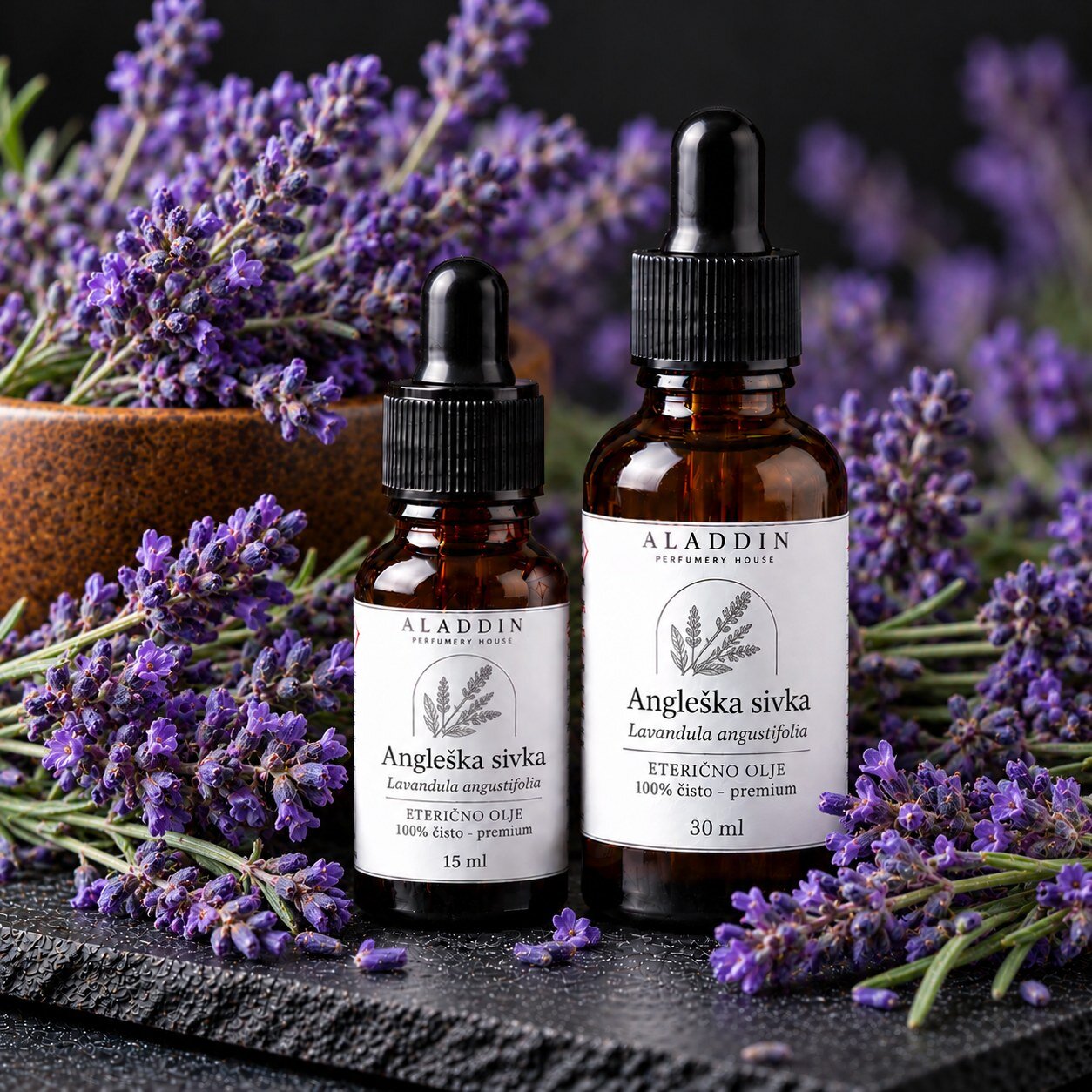 English lavenderFirst choice for sleepView product
 Virginia cedarwoodWoody, groundingView product
 FrankincenseFor meditation and breathingView product
4–6. Sweet citrus: orange, mandarin, bergamot
Citrus oils are considered morning oils – and for grapefruit or lemongrass that’s true. But three citrus oils are the exception and are among the most popular evening oils, especially in families:
- Sweet orange (Citrus sinensis) – sweet, juicy and friendly. The gentlest calming oil in our range, and children love it too. Blended with lavender it softens its herbal note.
- Mandarin (Citrus nobilis) – even softer and more “child-friendly” than orange. In aromatherapy it is regarded as one of the gentlest oils for the evening in a child’s room (in a small dose and only for children over three).
- Bergamot (Citrus bergamia) – a citrus with a floral touch, familiar from Earl Grey tea. It is bright and fresh, yet calming; the oil that rounds off any blend and gives it a “perfume-like” character.
One warning: citrus oils, especially bergamot, make the skin more sensitive to sunlight. In a diffuser in the evening that’s not a problem, but don’t apply them to your skin if you’ll be in the sun the next day.
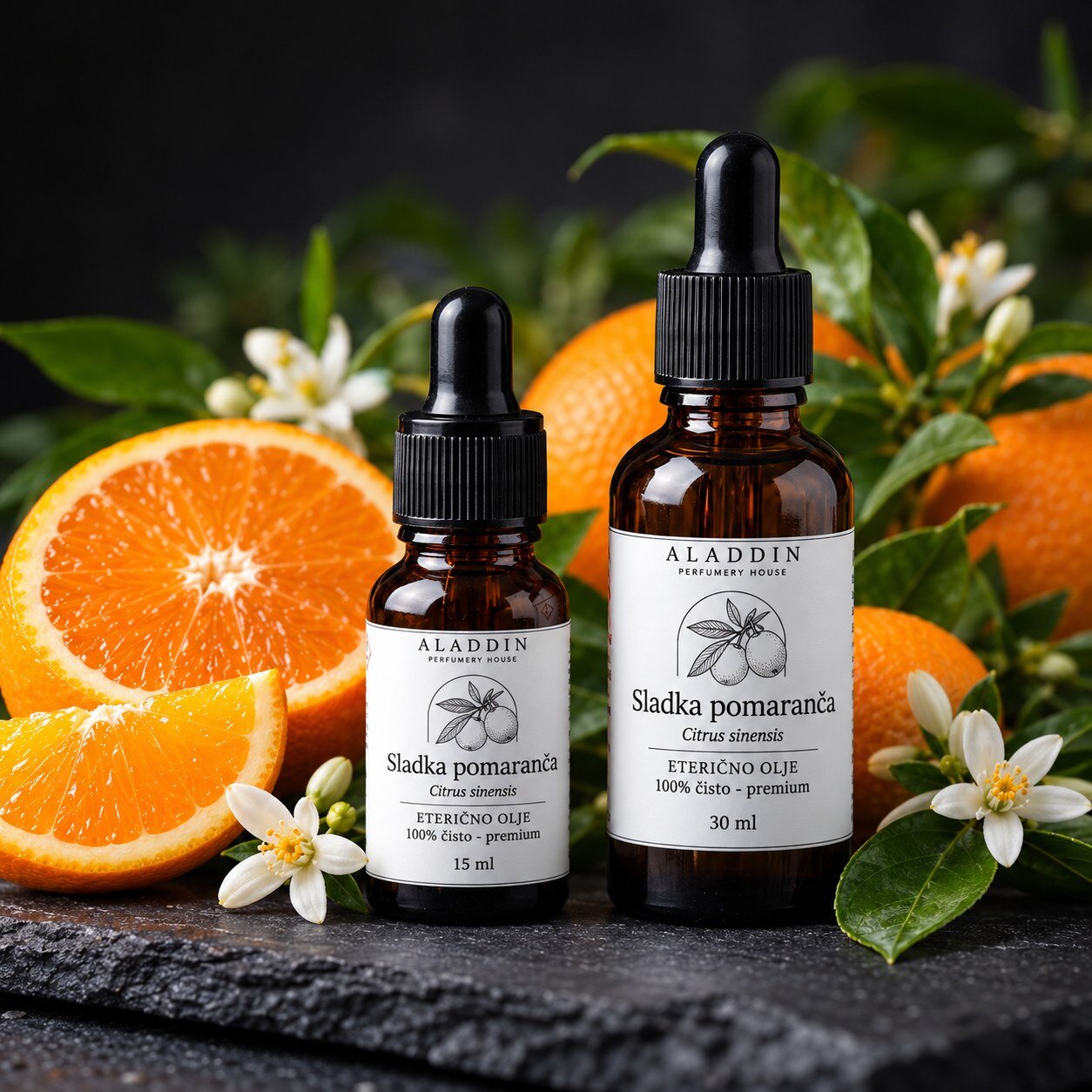 Sweet orangeThe gentlest choiceView product
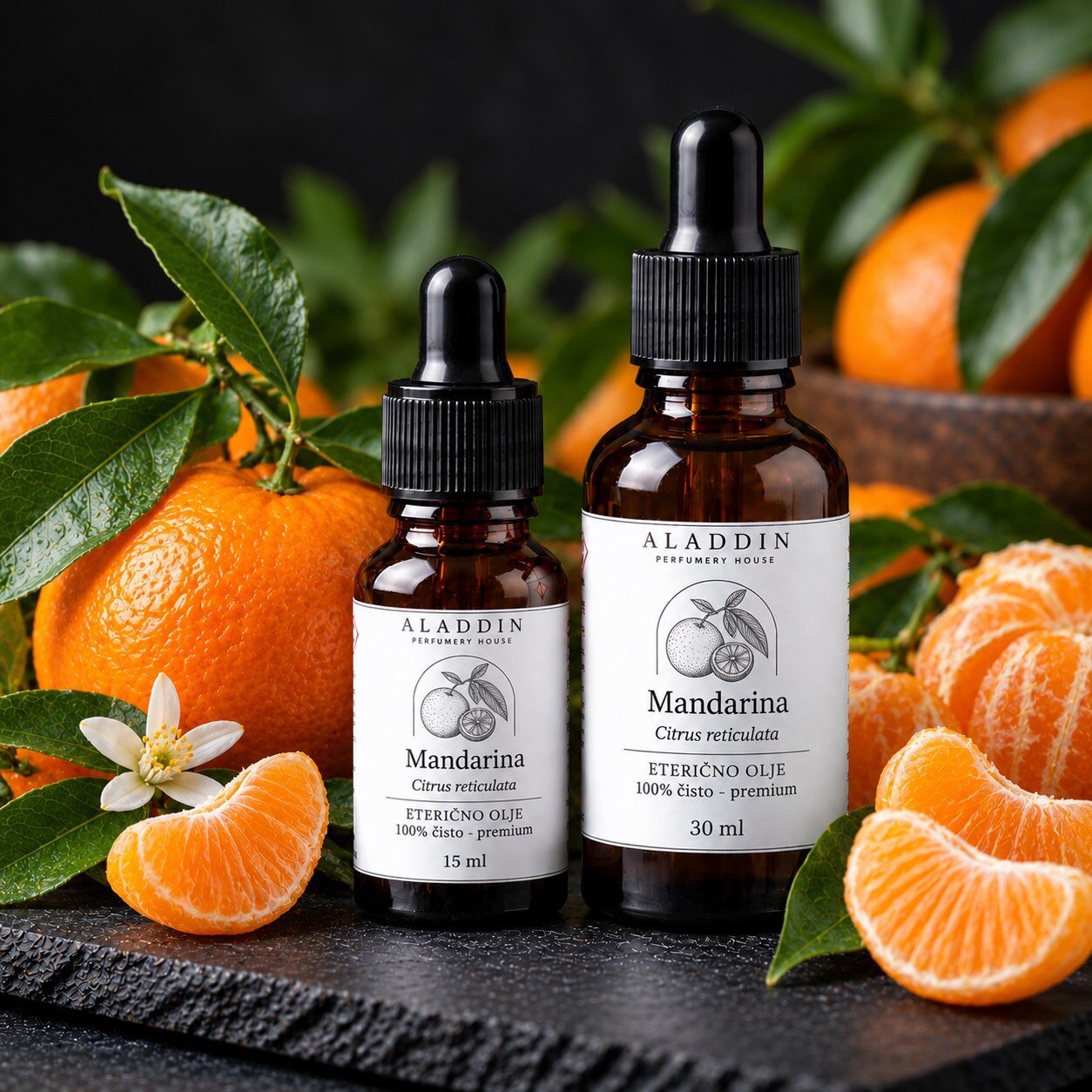 MandarinSoft and child-friendlyView product
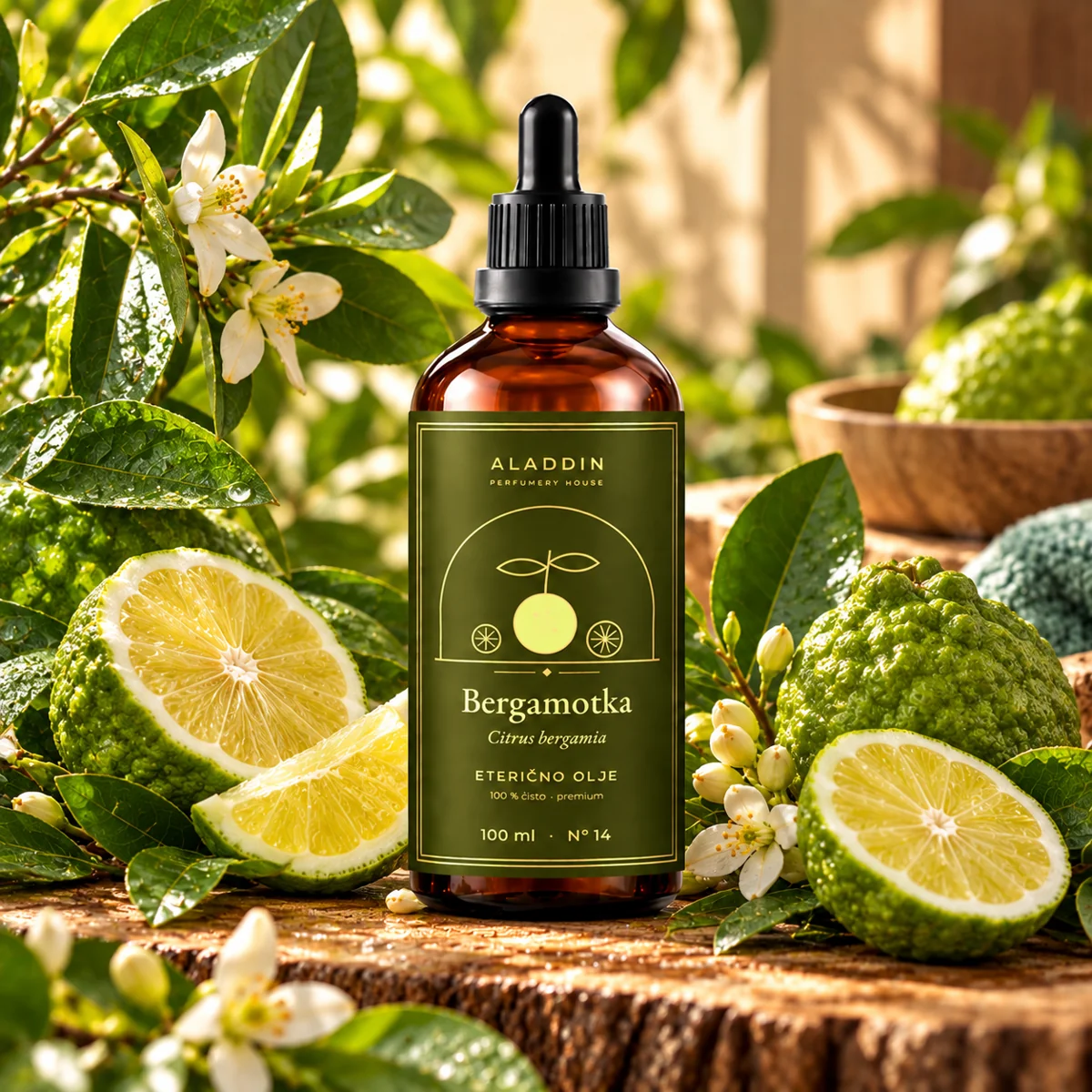 BergamotFresh yet calmingView product
7. Clary sage – when tension won’t let go
Clary sage (Salvia sclarea) has a warm, herbal, slightly sweet scent and is considered one of the most relaxing oils of all in aromatherapy. We reach for it on evenings when tension builds up in the shoulders and jaw, and it is especially popular with women. Don’t confuse it with common sage (Salvia officinalis), which is much stronger and not suitable for evening use.
8. Ylang ylang – deeply relaxing, but only in a small dose
A dense, exotically floral scent you know from many perfumes. Ylang ylang (Cananga odorata) relaxes and calms, but there is one rule: one drop is enough. In too large a dose the scent is heavy and can cause a headache. Blended with bergamot and geranium it becomes a real evening fragrance.
9–10. Geranium, patchouli and Canadian hemlock – oils for rounding off
Three oils we rarely use on their own, but which give a blend its character. Geranium with its rosy-green scent balances the mood and softens woody notes. Patchouli is earthy, warm and deep – one drop colours the whole blend, so use it sparingly. Canadian hemlock is a fresh conifer oil with a soft forest scent that adds a feeling of clean air to the evening.
Five evening blends for the diffuser
In blends the oils complement one another: a sweet citrus softens the herbal note, a woody oil makes the scent last longer, a drop of floral oil rounds it off. Below are five blends made exclusively from oils in our range. The amounts are for an ultrasonic diffuser in a bedroom (about 15–20 m²).

| Blend | Ingredients (drops) | When |
|---|---|---|
| Peaceful Night | 3 lavender + 2 sweet orange + 1 Virginia cedarwood | Every evening, the safest start |
| Forest Evening | 2 Virginia cedarwood + 2 frankincense + 1 Canadian hemlock + 1 lavender | For deep breathing and meditation |
| Soft Embrace | 3 bergamot + 1 ylang ylang + 1 geranium | After a tense day, a “perfumed” evening |
| Let the Day Go | 2 clary sage + 2 lavender + 2 mandarin | When your thoughts won’t stop racing |
| Warm Earth | 3 sweet orange + 1 patchouli + 1 frankincense | Cold autumn and winter evenings |
Tip: mix a blend you like in advance in an empty 10 ml bottle (multiply the ratios in the table by ten) and use 5–6 drops in the evening. After a few days the scent has “matured” and is even more harmonious.
How and how much: diffuser, bath, massage, pillow
Essential oils are highly concentrated – a single drop holds the aroma of a large amount of plant. In the evening the goal is a gentle scent in the background, not a dense cloud. Less is almost always more.

- Diffuser: 5–6 drops for a medium-sized bedroom (3–4 for a small one, 7–8 for a large one). Switch it on 20–30 minutes before bed and then turn it off – it doesn’t need to run all night. An ultrasonic diffuser doesn’t heat the oil, so the scent stays as it is in the bottle; the Himalayan salt night light is a lovely choice for the bedroom, and the Urban diffuser for the living room.
- Bath: first mix 4–6 drops into a spoonful of carrier oil, milk or a handful of salt, and only then add to the water. Oil doesn’t dissolve in water – if you drop it straight into the bath, it floats on the surface and sticks to the skin undiluted.
- Massage: 2–4 drops per 10 ml of carrier oil (1–2% dilution). Rub into the neck, shoulders and feet – feet are especially grateful in the evening.
- Pillow: 1 drop on a tissue or cotton pad placed next to the pillow – not directly on the bedding, as oil leaves a stain. Use lavender or cedarwood here; citrus oils evaporate quickly from fabric and do nothing.
Evening ritual: from screen to sleep in 90 minutes
Essential oil works best as part of a rhythm, not as a one-off try. Here is a simple routine you can repeat every evening – your body will learn it faster than you’d expect.

- 8:30 pm – Air the room. Open the bedroom window for five minutes, then switch on the diffuser with the “Peaceful Night” blend.
- 9:00 pm – A warm shower or bath. A drop of lavender or clary sage on the shower floor (away from the stream) or 4–6 drops in a carrier in the bath.
- 9:30 pm – Screens away. Dimmed light, a book, a drop of cedarwood on a tissue next to the pillow.
- 10:00 pm – Turn off the diffuser. Place a lavender eye pillow over your eyes and breathe for a few minutes using the 4-7-8 pattern: breathe in for four seconds, hold for seven, breathe out for eight.
The nose gets used to a scent within 15–20 minutes. If you “can’t smell” the blend any more, don’t add drops – the scent is still there, your nose has simply accepted it as part of the room. That’s actually a sign the ritual is working.
Safe use – a few rules worth following
- Never apply essential oils undiluted to the skin and do not swallow them.
- In pregnancy, breastfeeding, epilepsy, asthma and for children under three, consult a doctor or pharmacist before use. For small children use only gentle oils (sweet orange, mandarin, lavender) at half the dose and switch off the diffuser before sleep.
- Pets: cats and birds are sensitive to essential oils. Don’t leave the diffuser running in a room the animal can’t leave.
- Citrus oils (especially bergamot) are photosensitising – after applying to the skin, stay out of the sun for 12 hours.
- Store oils in a dark bottle, closed and away from heat. Citrus oils keep for about a year, woody and resinous oils for several years.
- Aromatherapy does not replace medical treatment. If sleep problems last for several weeks, talk to your doctor.
Frequently asked questions
Which essential oil is best for sleep?
English lavender (Lavandula angustifolia) is the most proven and most versatile choice. If you don’t like floral scents, try Virginia cedarwood or frankincense; in a child’s room, sweet orange or mandarin.
How many drops of essential oil should I put in a bedroom diffuser?
5–6 drops for a medium-sized bedroom, 3–4 for a small one. Switch the diffuser on 20–30 minutes before bed and then turn it off.
Can I mix essential oils together?
Yes – most evening blends are made of two to four oils. A good rule: one woody or resinous oil for depth (cedarwood, frankincense), one floral or herbal oil for calm (lavender, clary sage) and one sweet citrus for softness (orange, mandarin, bergamot).
Can I put essential oil directly on my pillow?
Better not – oil leaves a stain and is in direct contact with the skin of your face. Put a drop on a tissue or cotton pad and place it next to the pillow, or use a lavender eye pillow.
Are your essential oils really 100% natural?
Yes. All the oils in the Natural essential oils category are pure essential oils from the plant they are sold under, with no synthetic additives or diluents. We have a safety data sheet and a certificate of analysis for every oil, and we fill them into our own dark 10, 15 and 30 ml bottles.
To start: three oils and one diffuser
You don’t need to buy everything at once. With English lavender, sweet orange and Virginia cedarwood you can mix the “Peaceful Night” blend and several of its variations, covering almost every evening. When you feel like more, add frankincense or clary sage – and every evening will be a little different.
See the whole range in the Natural essential oilscategory. If you’re not sure where to start, write to us or give us a call – we’re happy to advise.


