

Blog
Peppermint: a freshness we feel as cold – history, production, properties and use

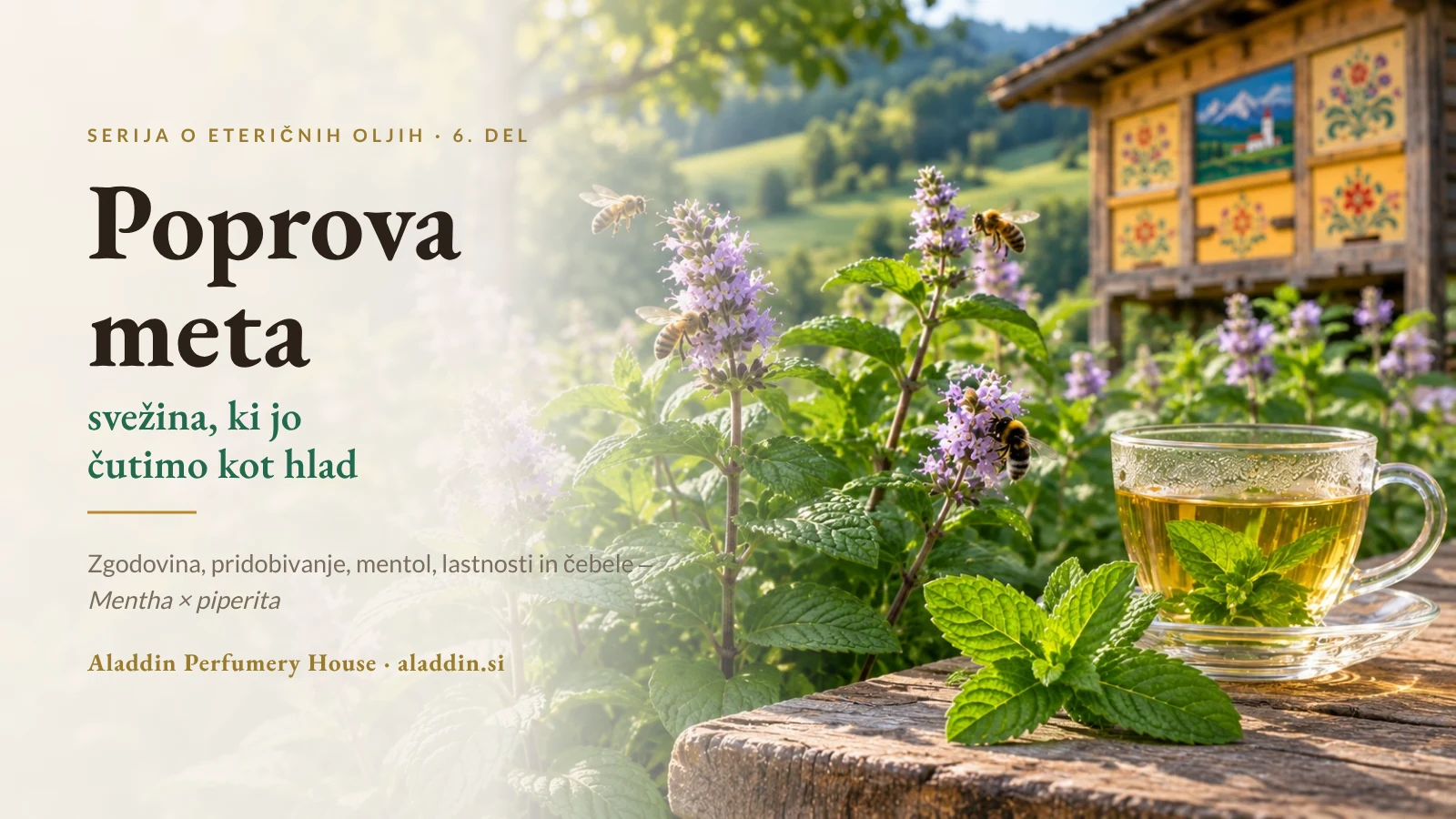
Toothpaste in the morning, chewing gum in the afternoon, a cup of mint tea in the evening. We meet peppermint several times a day, yet hardly think about it. We know even less that it is a plant that arose by chance, that it cannot be grown from seed and that its main constituent, menthol, helped to earn a Nobel Prize in 2021.
In the sixth part of our essential oil series it is the turn of peppermint. After geranium, Virginia cedarwood, frankincense, lemongrass and English lavender we turn to the most recognisable fresh scent in the world. We look at how the plant came about, how oil is obtained from it, why menthol cools, what is really proven and what mint has to do with bees.
Our peppermint essential oil is 100 % pure essential oil from the flowering herb of Mentha × piperita, obtained by steam distillation.

A plant that arose by chance
Peppermint (Mentha × piperita) belongs to the mint family (Lamiaceae), like lavender, rosemary and thyme. The “×” sign in the Latin name tells us it is a hybrid – a natural offspring of water mint (M. aquatica) and spearmint (M. spicata). The cross happened by itself, somewhere in Europe where both parent species grow together.
Because it is a hybrid, peppermint is almost always sterile – it does not produce seeds. It spreads by runners – shoots that creep under and over the ground and from which new plants grow. Anyone who has it in the garden knows this: once mint takes root, it is hard to contain. All the peppermints in the world are therefore really clones of a few selected plants.
The plant grows 30 to 90 centimetres tall and has square, often purple-tinged stems, dark green toothed leaves and tiny purple flowers in spikes at the tips of the stems. The best-known variety is Black Mitcham (Black Mitcham) with dark stems, named after the same place south of London where English lavender was grown.
Under the name mint, however, there are several plants with very different oils:
- Peppermint (M. × piperita) – cool, penetrating, sweetish. The main constituents are menthol and menthone. Our oil comes from it.
- Spearmint (M. spicata) – one of peppermint’s parents. Its oil contains almost no menthol, so it does not cool; the main constituent is carvone, which smells of chewing gum and caraway.
- Japanese mint (M. arvensis) – contains the most menthol, so crystalline menthol is made from it. Its oil is sharper and more bitter than peppermint, and most of it is produced in India.

Mint in your garden
Peppermint grows easily in Central Europe. It likes moist, humus-rich soil and partial shade, and survives winter underground. Because it spreads vigorously, gardeners often plant it in a trough or in a pot sunk into the ground. For tea, the leaves are picked just before flowering, when they contain the most oil. If left to flower, it attracts bees and other pollinators at the end of summer.
History: from an English ditch to a global flavour industry
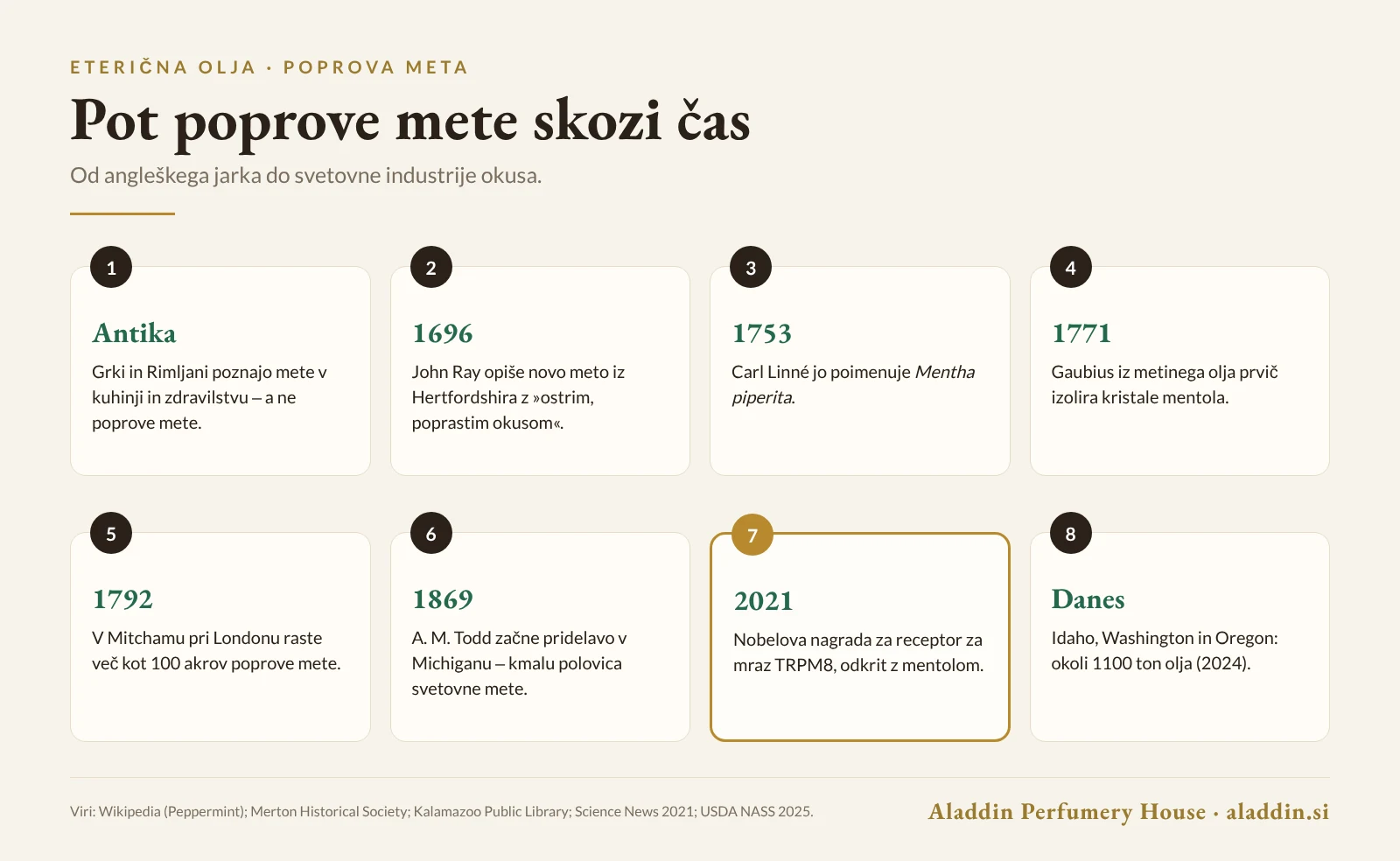
Mints were known in antiquity. The Greeks told of the nymph Minthe, whom a jealous Persephone turned into a plant; the Romans used mint in cooking and medicine, and in the Middle Ages it grew in every monastery garden. But these were other mints – peppermint as a distinct plant was only described at the end of the 17th century. Stories that it was found in Egyptian pyramids are therefore not reliable.
In 1696 the English botanist John Ray described in his survey of British plants a new mint found by Dr Eales in Hertfordshire. The plant with a “hot, peppery taste” quickly became a remedy for digestion. In 1753, Carl Linnaeus gave it the name Mentha piperita – “pepper mint”.
In the second half of the 18th century Mitcham south of London became the centre of cultivation. In 1792 more than 100 acres (about 40 hectares) of peppermint were counted there. Mitcham mint oil was renowned as the best in the world, and plants travelled to America.
In 1771 the Dutch physician Hieronymus David Gaubius first isolated menthol crystals from mint oil. In America, Samuel Ranney began growing and distilling mint in Massachusetts around 1812, and production moved westwards. In 1869, Albert M. Todd started production near Kalamazoo, Michigan. At the turn of the century his company accounted for half of world production, and Todd was called the “Peppermint King”.
In the 20th century production moved to the north-west of the USA because of disease (Verticillium wilt). Today the largest producers of peppermint oil are the states of Idaho, Washington and Oregon – in 2024 together they produced around 1,100 tonnes of oil. Most of it ends up in toothpaste, chewing gum and sweets.
In 2021, David Julius and Ardem Patapoutian received the Nobel Prize in Physiology or Medicine for discovering receptors for temperature and touch. Julius used menthol to discover the TRPM8 receptor, with which we sense cold.
From mowing to the bottle: how the oil is made
The oil forms in tiny glandular hairs on the underside of the leaves. There is most of it at the start of flowering, so mint for oil is cut in July and August, when the first flowers open.
- Mowing. The mint is cut like hay, with leaves and stems.
- Wilting. The cut mint wilts in the field for a day or two. It loses some water but the oil stays in the leaves, so distillation is quicker and cheaper.
- Steam distillation. In the USA the wilting mint is loaded into large closed trailers, “mint tubs”, and taken to the distillery on the farm. Steam passes through the mint and carries away the volatile substances.
- Separation. In the condenser the steam turns to liquid, and the oil separates from the water and is skimmed off the top.
- Rectification and maturing. The oil is often purified once more to remove bitter and “green” notes, then it rests and its scent rounds out.
Fresh herb yields about 0.3 to 0.5 % oil. One hectare produces about 115 kg of oil – that was the average yield in the north-west USA in 2024 (103 pounds per acre). So one kilogram of oil requires mowing and distilling 200 to 300 kilograms of fresh mint.

The distilled mint does not go to waste – it is used as feed or compost. We have described how essential oils are made in more detail in the article Essential oils: from plant to bottle.
What is in a drop: the composition of the oil
The quality of peppermint oil is defined by the European Pharmacopoeia. The main constituents are:
- menthol – 30 to 55 %; gives coolness and freshness,
- menthone – 14 to 32 %; minty, slightly woody and more bitter than menthol,
- 1,8-cineole – 3.5 to 8 %; a eucalyptus note,
- menthyl acetate – 2.8 to 10 %; a fruity, sweetish softness,
- isomenthone, menthofuran and limonene – a few per cent each,
- pulegone – at most 3 %; the stricter limit applies because in larger amounts it is harmful to the liver.
Oils from different parts of the world and different years differ. A typical oil contains about 40 % menthol and a little over 20 % menthone.

Why menthol cools even though it does not cool
Menthol does not lower skin temperature by even a degree. It binds to the TRPM8 receptor in nerve endings, which otherwise responds when the temperature drops below about 25 °C. Menthol “tricks” it, and the brain receives the message “cold” even though there is no cold. It was with the help of menthol that the receptor was discovered in 2002, and David Julius received the Nobel Prize for this discovery in 2021 (together with Ardem Patapoutian).
How peppermint oil smells
The scent is cool, penetrating, clean and slightly sweet, with a herbaceous, almost creamy background. A good peppermint oil is not sharp or bitter like cheaper Japanese mint and does not smell of chewing gum like spearmint. It is very strong: a few drops are enough for a whole room, and in blends it quickly dominates.
That is why we use it sparingly with other oils – one drop of mint to three or four drops of other oils. It pairs beautifully with citrus oils such as grapefruit and sweet orange, with rosemary, eucalyptus, lemongrass and lavender.
Peppermint is like an open window in winter – one breath and the room is fresh again.
Mint, menthol and bees
With lavender we wrote about forage; with mint the story is different and more interesting for beekeepers. Mint is both a bee plant and a source of a substance found in authorised medicines for bees.
Mint flowers
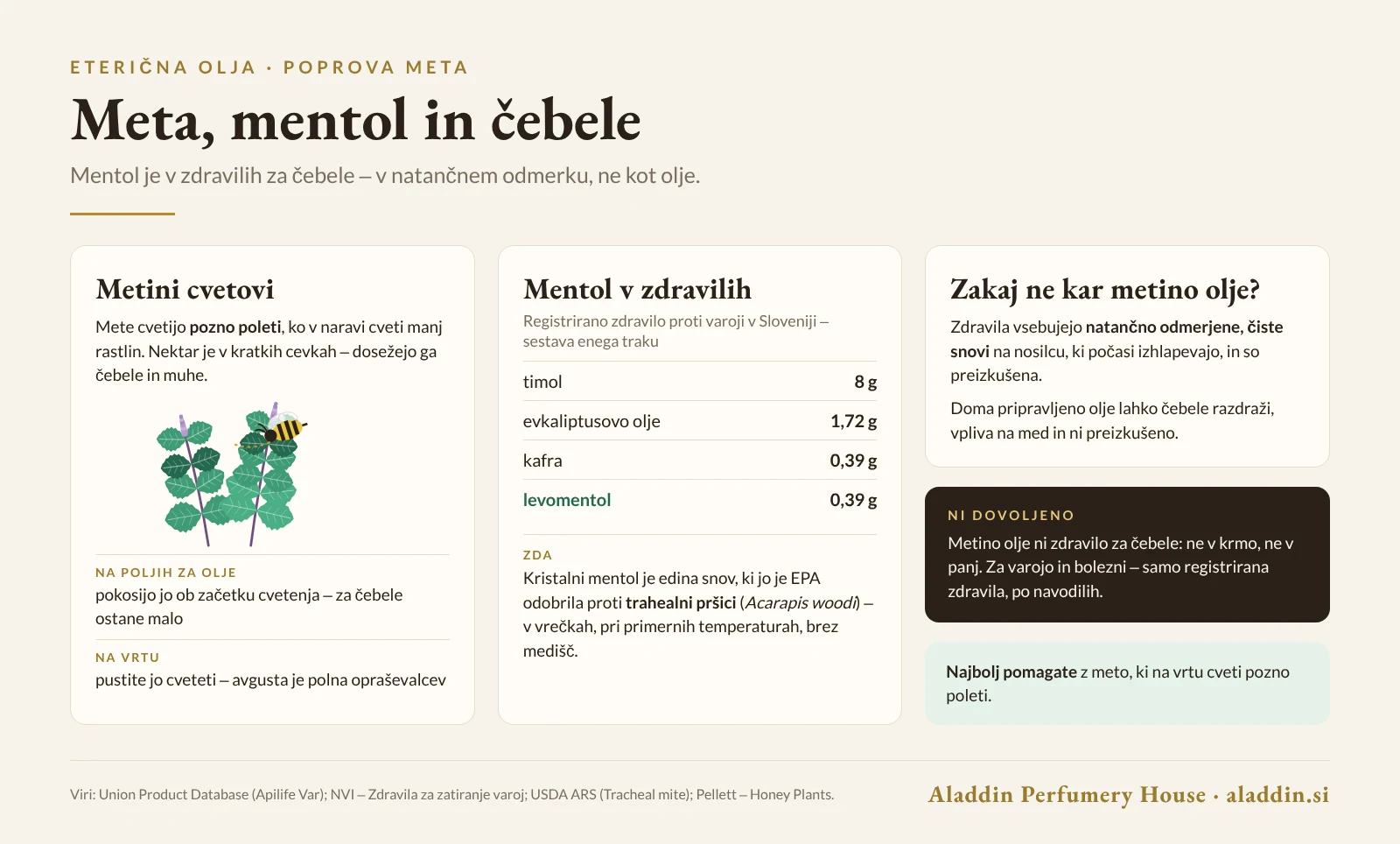
Mints flower in late summer, when fewer plants are blooming in nature. The nectar sits in short flower tubes, so bees and even flies can collect it. On fields where mint is grown for oil, bees do not get much of it, because it is cut at the start of flowering. In the garden it is different: if you let a mint patch flower, it is full of pollinators in August.
Menthol in medicines for bees
- In Slovenia a medicine in strip form is authorised for Varroa control that contains thymol (8 g per strip), eucalyptus oil (1.72 g), camphor (0.39 g) and levomenthol (0.39 g). The Slovenian National Veterinary Institute also lists it among Varroa medicines.
- In the USA menthol is the only substance approved by the Environmental Protection Agency (EPA) to control the tracheal mite (Acarapis woodi), which infests bees’ breathing tubes. Crystalline menthol is used in bags, only at suitable temperatures and without honey supers on the hive.
That does not mean you can drip mint oil into a hive. Authorised medicines contain precisely dosed, pure substances on a carrier that evaporate slowly. Home-made oil preparations can irritate bees, affect the honey and are untested.
Where else peppermint comes in handy
- In the bathroom and for oral hygiene. We associate the scent of mint with cleanliness, so it is a classic in toothpastes, mouthwashes and chewing gum – and that is where most American oil goes.
- In the kitchen – the leaves. Fresh leaves are for tea, lemonade, fruit salads, lamb and chocolate desserts. The essential oil is not for cooking – a drop of oil is stronger than a whole handful of leaves.
- At work and study. The cool scent helps many people wake up and focus. Small studies report increased alertness, but the results are mixed.
- In the car. A brief scent of mint freshens the cabin. Do not overdo it – a strong scent in a small space quickly becomes annoying.
- In engineering. Mint also has an unusual use: mint oil is used to check pipes for leaks, because the smell is noticed immediately wherever a pipe leaks.
Properties: what is proven, what is researched and what is folk tradition
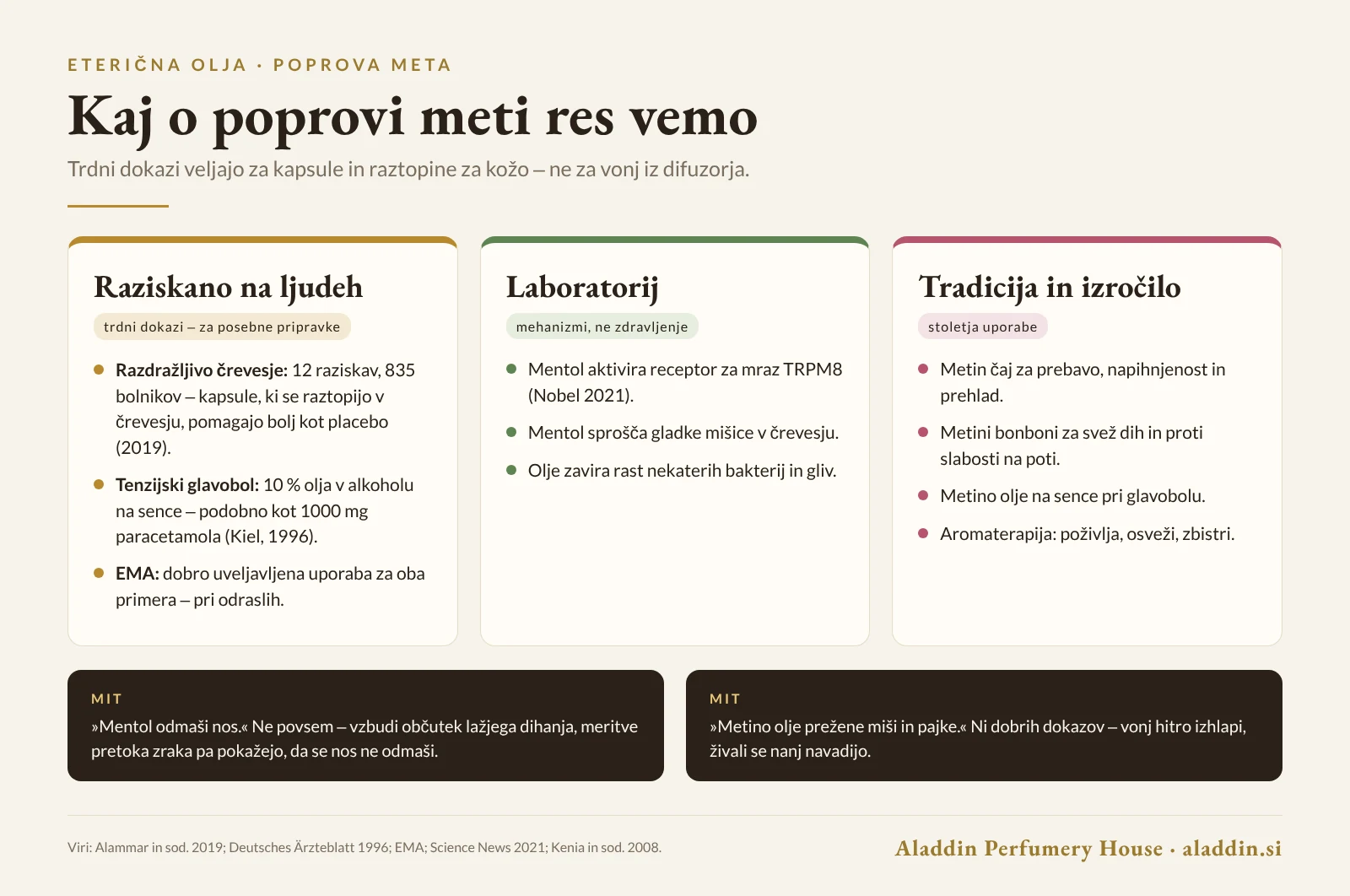
Peppermint is one of the few aromatic plants whose oil has well-established use status in Europe – meaning its effects are supported by clinical studies. But this evidence applies to special preparations: capsules that dissolve only in the intestine, and solutions for the skin. Not to the scent from a diffuser.
Researched in humans
- Irritable bowel syndrome. An analysis of 12 studies with 835 adult patients (2019) showed that peppermint oil capsules that dissolve in the intestine helped more than placebo – improvement in symptoms was 2.4 times more likely and abdominal pain decreased. The most common side effect was heartburn. The EMA recognises these capsules as well-established use for cramps, bloating and abdominal pain.
- Tension headache. In a study by the neurology clinic in Kiel (1996), a 10 % solution of peppermint oil in alcohol applied to the forehead and temples relieved headache about as well as 1000 mg of paracetamol. The EMA recognises this use for adults.
- Cough and cold. For inhalations and chest rubs, the EMA recognises peppermint oil only as a traditional medicine – without clinical evidence, never for children under two, and not recommended for children up to 12.
In the laboratory
- The cold receptor. Menthol activates the TRPM8 receptor – hence the feeling of cold on the skin and in the mouth (Nobel Prize 2021).
- Antimicrobial. In the laboratory peppermint oil inhibits the growth of some bacteria and fungi. This does not mean the oil cures infections.
- Muscle relaxation. Menthol relaxes smooth muscle in the intestine, which is why the capsules relieve cramps – and why in some people they cause heartburn.
Folk tradition and aromatherapy
Mint tea is one of the most common home remedies for poor digestion, bloating and colds. Mint sweets used to be carried in the pocket for “fresh breath” and against travel sickness, and mint oil was rubbed on the temples for headaches. Aromatherapists describe the oil as invigorating, refreshing and clarifying, suitable for the morning and for work. All this is based on experience – mint tea can be pleasant and useful, but it is no substitute for treatment.
Two myths you can safely forget
- “Menthol unblocks the nose.” Not quite. Menthol creates the feeling that air flows more easily, but measurements of airflow through the nose show that the nose does not actually become less blocked. The feeling is real, the effect only partly.
- “Peppermint oil drives away mice and spiders.” There is no good evidence for this. The scent evaporates quickly and animals get used to it. Against mice, sealed gaps, cleanliness and traps help, not peppermint oil.
How we use mint at home
Our oil is intended for scenting rooms. It is very strong, so less is always more.
- Ultrasonic diffuser: 2–3 drops per 100 ml of water if you use mint alone – mint is stronger than most oils. In blends, one drop of mint to three or four drops of other oils.
- Waterless nebuliser: pour the oil into the device’s bottle and screw it on. Set short intervals.
- Scent stones, wooden beads or ceramics: 1–2 drops, repeat as needed.
For a work corner the Urban diffuseris a lovely choice. Mint is for the morning and daytime; for the bedroom it is usually too stimulating. Air the room occasionally during use.
Six peppermint blends for the diffuser
The following blends use only oils from our range; the amounts are for an ultrasonic diffuser with about 100–150 ml of water.
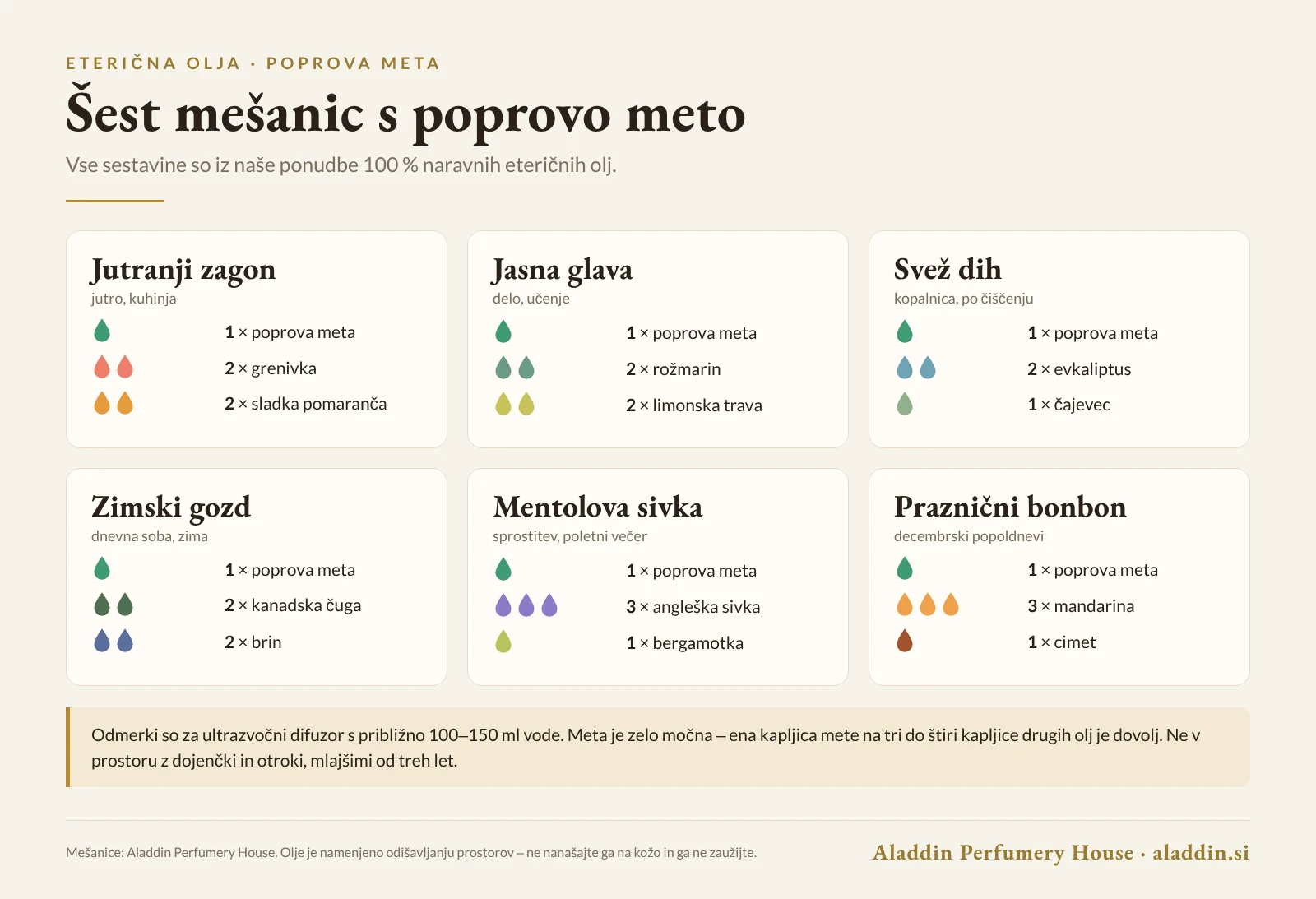
| Blend | Composition (drops) | When |
|---|---|---|
| Morning boost | 1 peppermint + 2 grapefruit + 2 sweet orange | morning, kitchen |
| Clear head | 1 peppermint + 2 rosemary + 2 lemongrass | work, study |
| Fresh breath | 1 peppermint + 2 eucalyptus + 1 tea tree | bathroom, after cleaning |
| Winter forest | 1 peppermint + 2 Canadian hemlock + 2 juniper | living room, winter |
| Minty lavender | 1 peppermint + 3 English lavender + 1 bergamot | relaxation, summer evening |
| Festive candy | 1 peppermint + 3 mandarin + 1 cinnamon | December afternoons |
Tip: if a blend is too “minty”, do not add other oils; next time reduce the mint to half a drop – put it on a toothpick and dip it in the water.
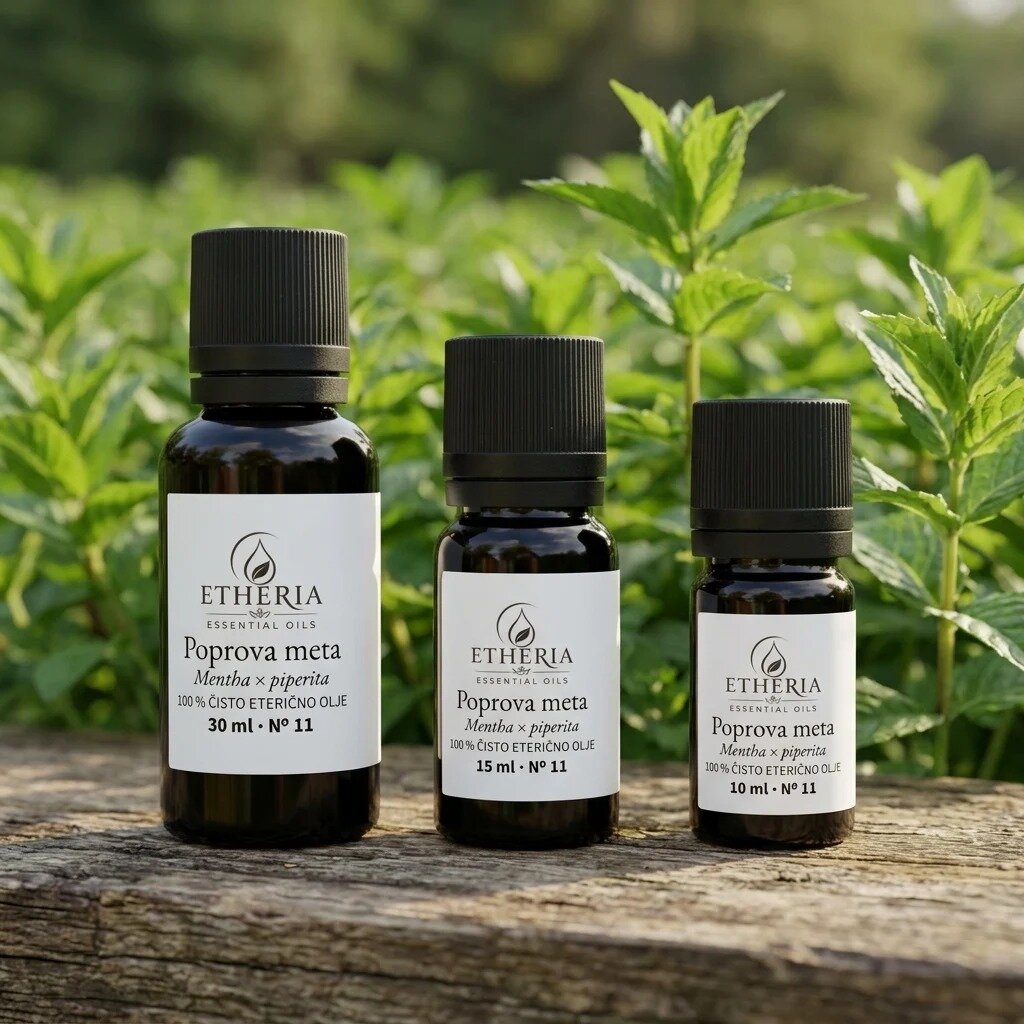 PeppermintCool, clean, penetratingView product
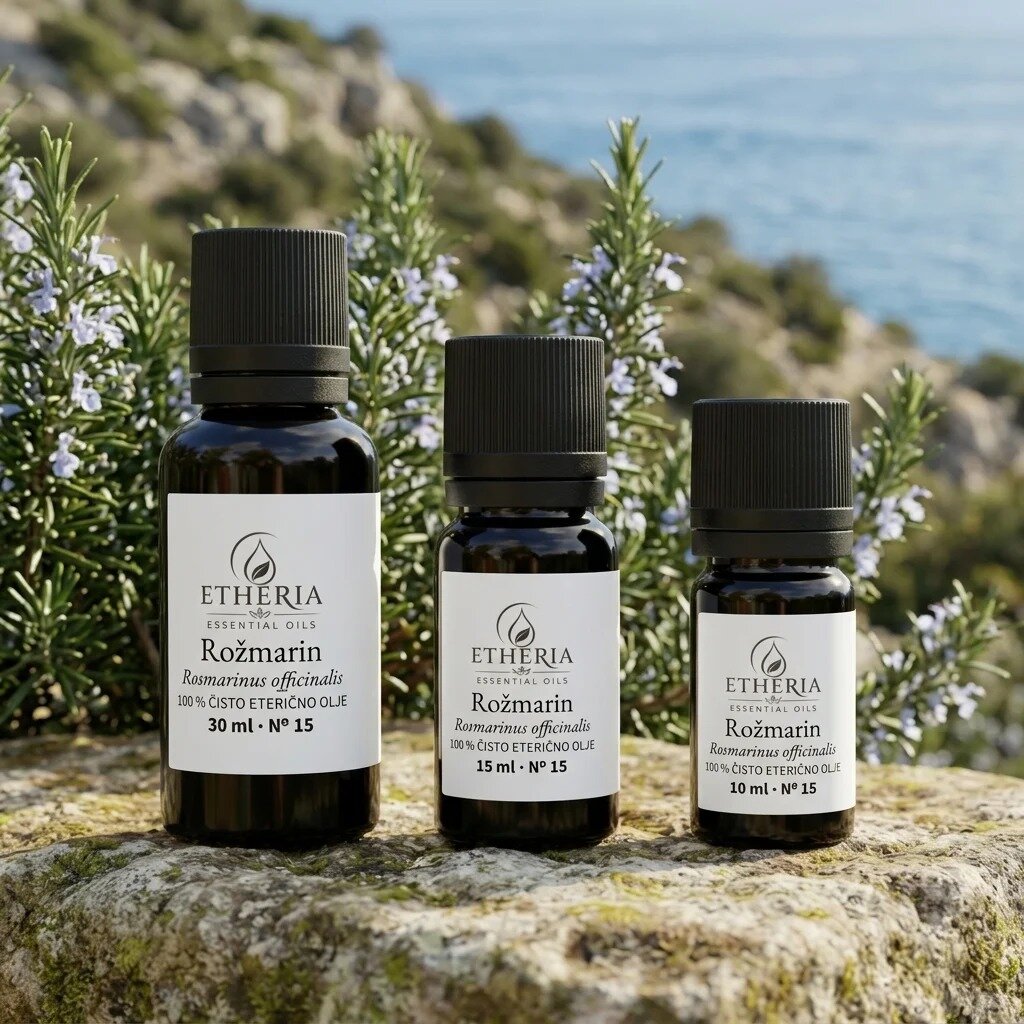 RosemaryFor a clear headView product
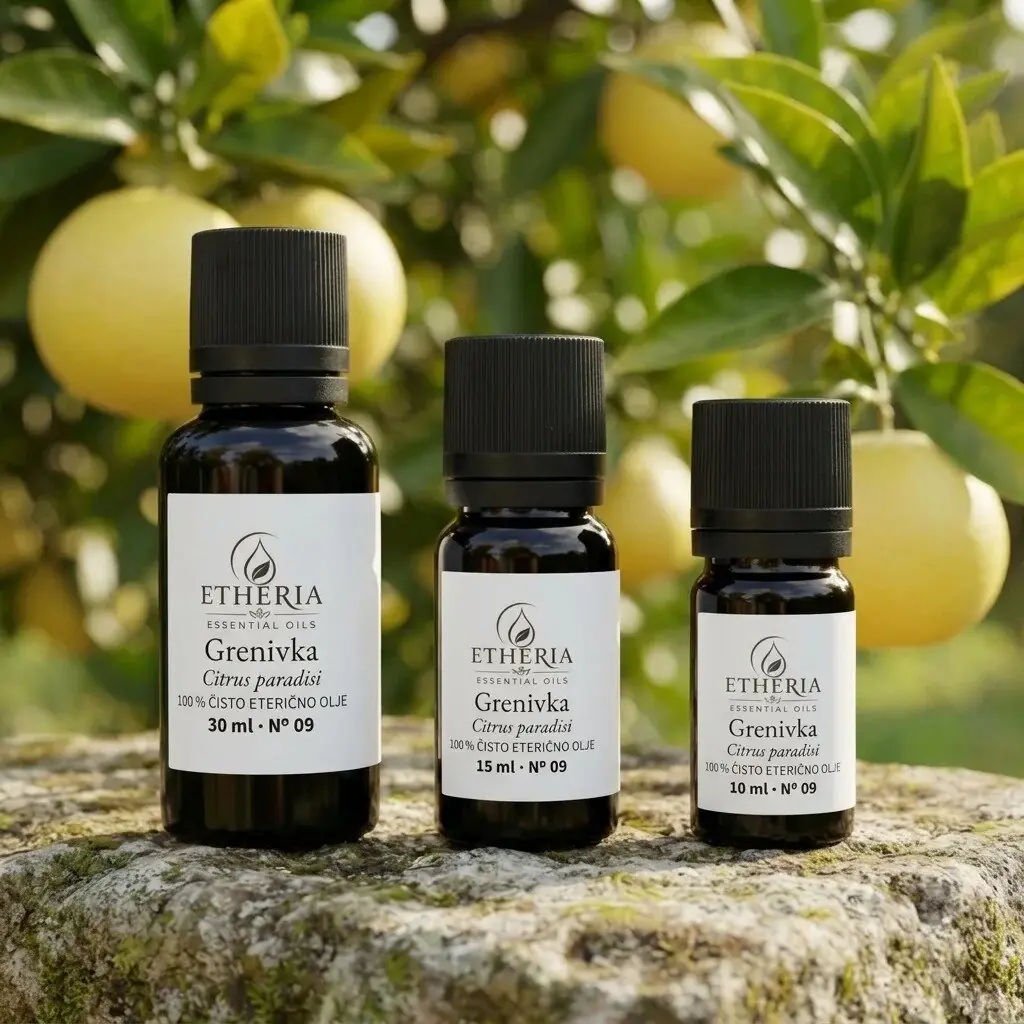 GrapefruitA bright morning companionView product
Safe use – a few rules to follow
- Do not apply the oil to the skin or take it internally. Our oil is not a cosmetic, a medicine or a food flavouring, but a concentrate for scenting rooms. The capsules and solutions from the studies are specially manufactured, authorised medicines.
- Babies and young children: in babies and young children menthol can reflexively cause the larynx to close and breathing to stop. Never apply the oil to a child’s face or chest, and do not use a diffuser with mint in a room where there are babies or children under three.
- Protect your eyes. Menthol strongly irritates the eyes. If oil gets into the eyes, rinse them carefully with water for several minutes and remove contact lenses. If irritation persists, seek medical advice. Wash your hands after contact with the oil.
- Do not overdo the dose. Too strong a mint scent can cause headache, dizziness or nausea. If this happens, switch off the diffuser and air the room.
- Pets: cats and dogs are more sensitive to essential oils than people. While the diffuser is running, the animal should always be able to move to a scent-free room.
- Pregnant and breastfeeding women and people with asthma should discuss use with a doctor.
- The oil is harmful to aquatic life, so do not pour leftovers down the drain or into nature.
- Beekeepers: do not use mint oil in feed or in the hive. Only authorised medicines may be used to treat bees.
- Keep tightly closed in a cool, dark place out of the reach of children.
- Aromatherapy does not replace medical treatment. If you have recurring headaches or digestive problems, consult your doctor.
A safety data sheet is available for every oil, and we will email it to you on request. You can also see all warnings on the product page.
Frequently asked questions
What is the difference between peppermint, spearmint and Japanese mint?
Peppermint (Mentha × piperita) is a hybrid of water mint and spearmint; its oil contains about 30–55 % menthol and is cool and sweetish. Spearmint contains almost no menthol and smells of chewing gum. Japanese mint contains the most menthol, but its oil is sharper and more bitter.
Why does menthol cool?
Menthol activates the TRPM8 receptor in nerve endings, which otherwise responds to cold. The skin is not colder, but the brain receives the message “cold”. The Nobel Prize was awarded in 2021 for the discovery of this receptor.
Does peppermint oil help with headaches?
In a study, a solution of peppermint oil in alcohol applied to the temples helped with tension headache about as well as paracetamol, and the EMA recognises this use for adults. Our oil is not intended for application to the skin – there are authorised preparations for that.
Can I take peppermint oil for digestion?
No. For irritable bowel syndrome, special capsules that dissolve only in the intestine are effective. Our oil is intended only for scenting rooms. Mint tea is suitable for digestion.
Is mint safe for children?
Not for babies and young children. Menthol can reflexively cause breathing problems in them. Do not apply the oil to children’s faces or chests, and do not diffuse it in a room where there are children under three.
Is menthol really in medicines for bees?
Yes. In Slovenia a Varroa medicine is authorised that contains thymol, eucalyptus oil, camphor and levomenthol. These are precisely dosed substances in an authorised medicine – so do not use mint oil in the hive.
How many drops do I put in the diffuser?
Mint alone: 2–3 drops per 100 ml of water. In blends, one drop of mint to three or four drops of other oils.
Does mint repel mice?
There is no good evidence for this. The scent evaporates quickly and mice get used to it. Sealed gaps and cleanliness help more.
A plant we believe cools us
Peppermint arose by chance in an English ditch, travelled from Mitcham to America, from Michigan to the north-west USA, and today it is found in almost every toothpaste in the world. Its menthol helps us with headaches and digestion, helps beekeepers treat bees, and helped scientists understand how we sense cold.
If you would like to get to know it, start simply: in the morning put one drop of peppermint and two drops of grapefruitinto the diffuser. You will find the whole range in the category Pure essential oils. In the previous parts of the series we introduced geranium, Virginia cedarwood, frankincense, lemongrass and English lavender.
In the next part of the series we will introduce another oil from our range. If you have any questions, write to us or call – we are happy to advise you.
Sources
- EMA: Mentha × piperita L., aetheroleum – assessment report (Ph. Eur. composition)
- EMA: Menthae piperitae aetheroleum – herbal medicinal product
- Wikipedia: Peppermint (origin, John Ray 1696, Linnaeus 1753)
- Merton Historical Society: Mitcham Herbal Industries
- Peppermint Kings: Peppermint in America
- Kalamazoo Public Library: A. M. Todd Company
- USDA NASS Agri-Facts (Jan. 2025): peppermint oil production 2024
- Science News: Nobel Prize 2021 – receptors for temperature and touch
- Alammar N. et al. (2019): The impact of peppermint oil on the irritable bowel syndrome – BMC Complement Altern Med
- Deutsches Ärzteblatt (1996): Spannungskopfschmerz – Pfefferminzöl ist anderen Analgetika ebenbürtig
- Kenia P. et al. (2008): Does inhaling menthol affect nasal patency or cough? – Pediatr Pulmonol
- NAHA: Peppermint Safety Info (children and menthol)
- Union Product Database: Apilife Var bee-hive strip (composition, authorisation in Slovenia)
- NVI, Veterinary Faculty Ljubljana: Medicines for Varroa control in bees
- USDA ARS: Tracheal mite (menthol)
- Pellett: American Honey Plants – Mint


