

Blog
Geranium: the plant that smells of roses – history, extraction and properties of the essential oil

In summer we find them on almost every balcony: red, pink and white “geraniums” tumbling in lush cascades over wooden railings. Few people know, however, that geranium essential oil doesn’t come from these balcony beauties but from their more modest relative. It has tiny pink flowers you hardly notice, and leaves that smell of roses at the lightest touch.
With this article we begin a series on the essential oils in our range. First up is geranium – an oil perfumers have used for two hundred years as the more affordable sister of rose. We’ll look at where the plant comes from and why botanists don’t call it a geranium at all, how it reached our bottles via Dutch ships, French perfumers and farmers on the Nile, how the oil is made and what’s in it. Finally, we’ll look at what has been scientifically studied and what are simply lovely stories passed down from generation to generation.
Our geranium essential oil is a 100% natural oil of the plant Pelargonium graveolens from Egypt, obtained by steam distillation of the leaves, stems and flowers. We fill it into brown 15 and 30 ml bottles.

Geranium or pelargonium? A mix-up almost three hundred years old
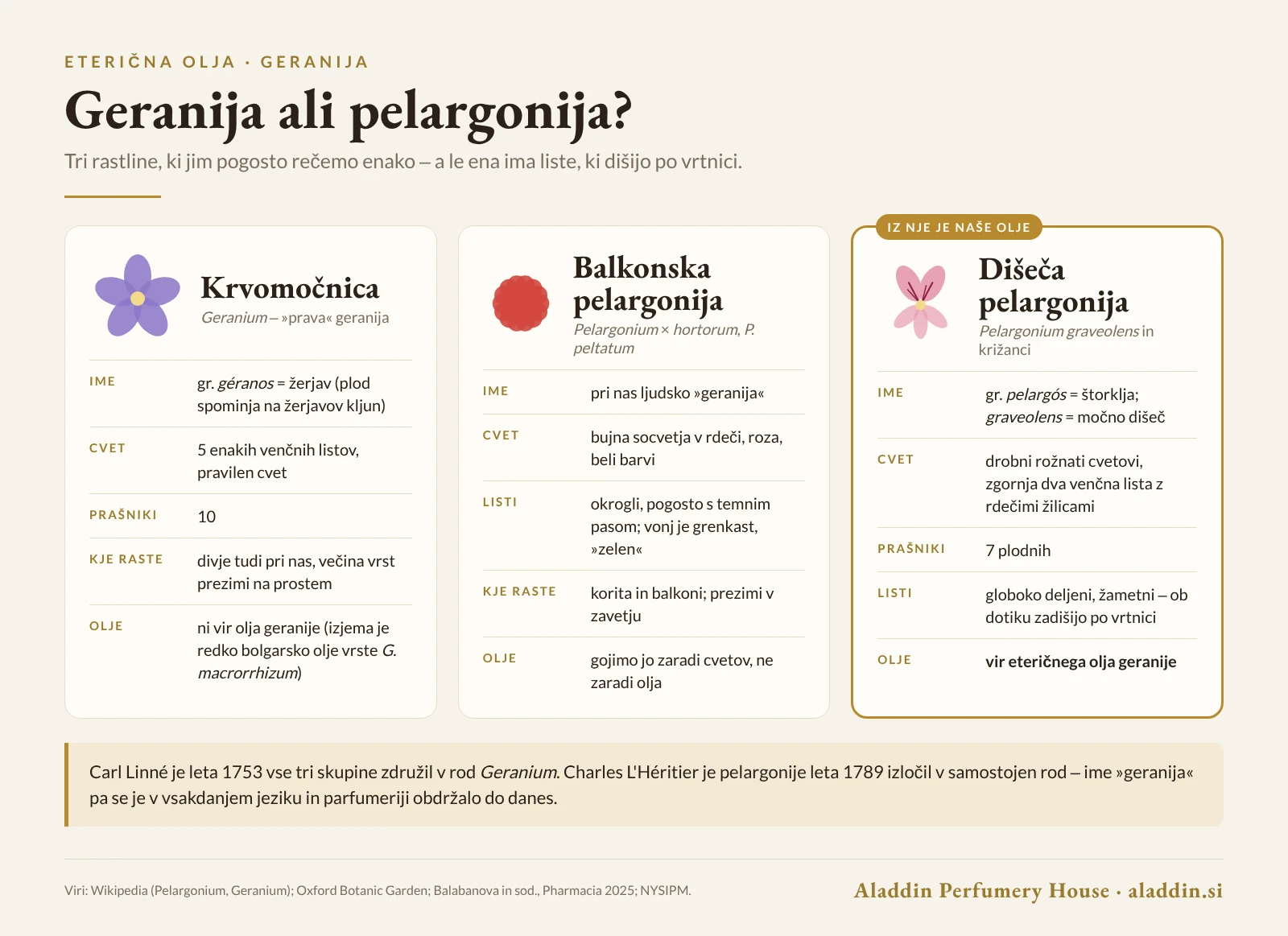
If you want to start a conversation with a botanist, point at a balcony box and say “geraniums”. You’ll be corrected: those are pelargoniums. The true geranium, Latin Geranium, is the cranesbill – a plant that also grows wild in meadows and along woodland edges and has regular flowers with five equal petals.
The culprit behind the confusion is none other than the father of modern botany, Carl Linnaeus. In 1753 he grouped three similar plant groups into the genus Geranium : cranesbills, storksbills (Erodium) and pelargoniums. The Oxford botanist Johann Jacob Dillenius had already proposed the separate name Pelargoniumin 1732, but Linnaeus’s reputation held back the distinction for forty years. Only in 1789 did the French botanist Charles L’Héritier separate pelargoniums into a genus of their own. He told them apart by their stamens: the cranesbill has ten fertile ones, the pelargonium seven.
The two names paint a lovely picture from nature. Geranium comes from the Greek word géranos, crane, and Pelargonium from pelargós, stork. Both plants have a fruit with a long, narrow “beak” that resembles a bird’s. In gardening and perfumery the old name has stuck nonetheless: we still call the oil geranium oil, even though botanically it is pelargonium oil.
There is one more important difference. Balcony pelargoniums (Pelargonium × hortorum and the trailing P. peltatum) are grown for their flowers, and their leaves smell bitter. The essential oil comes from scented pelargoniums – a group of cultivars with the scent of rose, lemon, mint, apple, coconut or nutmeg. The most important of them for perfumery is Pelargonium graveolens, the rose geranium. The Latin graveolens means “strong-smelling”.
A plant from southern Africa
Rose geranium is native to southern Africa, from eastern Zimbabwe to South Africa’s Eastern Cape province. In the wild it grows in the subtropical belt, preferring moister, semi-shaded sites. It is an upright, much-branched shrub between 60 centimetres and a good metre tall. Young stems are herbaceous and turn woody with age, and all are densely covered in hairs.
The leaves are heart-shaped and deeply lobed, green and slightly hairy on top, grey-green and almost woolly underneath. The flowers are small, white to pink, gathered in groups of three to seven in umbel-like clusters. The two upper petals are slightly larger and decorated with dark red veins. In its homeland it flowers from August to January, that is, during the local spring and summer.
The most important part, though, is hidden on the leaf surface. Among the ordinary hairs are tiny glandular hairsin which the plant stores its essential oil. When you rub a leaf between your fingers you damage them and the scent is released instantly. Young leaves contain the most oil, and the composition changes as the leaf ages: young leaves contain more geraniol, older ones more citronellol.
The plants on oil plantations, however, are mostly not the wild species. They are hybrids bred in Europe from several South African species, yet in the trade they are still called Pelargonium graveolens. Rose geranium is not hardy enough for a cold climate, as it can’t tolerate frost. You can grow it in a pot – outdoors in summer and in a bright, cool place indoors in winter.
History: from the Cape of Good Hope to Grasse and the Nile valley
The peoples of southern Africa knew pelargoniums long before Europeans did. The genus Pelargonium is one of the most important in local folk medicine – various species were used for wounds, skin problems, diarrhoea and fever.
The first pelargoniums reached Europe at the beginning of the 17th century. In 1632 the English gardener and plant collector John Tradescant brought the species Pelargonium tristeto England, and by 1648 a pelargonium was already on the plant list of the Oxford Botanic Garden. When the Dutch set up a supply station for their ships at the Cape of Good Hope in the mid-17th century, new species arrived in Europe ever faster – among them scented ones.
Scented pelargoniums enjoyed their real fame in the 19th century. In Victorian England they were grown in hundreds of varieties. Their leaves were placed in crystal finger bowls on formal tables, in jars of hot jam and at the bottom of cake tins, and used to scent sugar and linen. In the language of flowers, rose geranium meant “preference”.
For perfumery, the story begins in France. The first distillation trials took place in Lyon in 1819, and the first plantation for oil was planted in 1844 in Grasse, the capital of perfumery. The oil quickly became a prized substitute for the far more expensive rose oil. Production then moved south – to Algeria, Morocco and the island of Réunion in the Indian Ocean, once called Île Bourbon.
Rose geranium was brought to Réunion around 1870, and “Bourbon” became a byword for the finest geranium oil in the world. The island was the world’s leading producer until the 1970s, and geranium oil was long its second most important export after sugar cane. Today Réunion produces only small quantities. Most of the world’s oil, an estimated 200 to 300 tonnes a year, is produced in Egypt, followed by China and Madagascar.

Geranium from Egypt: where our oil comes from
Our oil comes from Egypt, the world’s largest producer of geranium oil. Almost all Egyptian production is south of Cairo, in the Beni Suef governorate on the Nile. There geranium is grown as an annual crop, while in the Nile Delta the plants are left to grow for up to three years, which allows a second harvest in autumn.
Geranium is grown mostly by smallholders, often together with garlic, which naturally deters pests. The leaves are processed in local distilleries – there are around sixty of them. Egyptian oil has a recognisably greener and more aromatic character than oil from Réunion, which makes it excellent for room fragrance and blends.
From leaf to bottle: how geranium essential oil is made
Geranium oil is obtained by steam distillation from the green parts of the plant: leaves, stems and flowers. The process is several hundred years old, but every distiller has their own little secrets.
- Harvest. The plants are cut when they begin to flower. In Egypt there are usually two harvests a year.
- Wilting. The cut plants are often left in the air for a few days. A study from Egypt showed that three days of wilting before distillation increases the oil yield and improves its composition.
- Distillation. The plants are loaded into a large still through which hot steam is passed. The steam opens the glandular hairs on the leaves and carries off the volatile fragrant compounds. On Réunion some stills are still fired with wood today, and one charge takes at least four hours.
- Cooling and separation. The steam and oil travel through a cooled pipe where they condense. In the collecting vessel, the so-called Florentine flask, the oil – which doesn’t mix with water – gathers at the top. The remaining water is the hydrosol – a gentle “geranium water”.
- Resting and bottling. Freshly distilled oil has a sharp top note, partly due to the sulphur compound dimethyl sulphide, so the oil is left to rest and clear before bottling. It is then filled into dark containers.
How much plant goes into one bottle
The yield is relatively low: about 0.1 to 0.3% oil is obtained from the fresh plant. A 2025 study of Egyptian oil measured 0.26%, a Tunisian one 0.19%. That means about 400 to 1,000 kilograms of plant are needed for a kilogram of oil, and around 5 to 13 kilograms of leaves and stems for our 15 ml bottle.
A comparison with rose shows why geranium is so popular. A kilogram of rose oil needs 3.5 to 5 tonnes of petals, while geranium’s similar rosy character needs many times less plant material. That’s why geranium has been perfumery’s most common rose substitute for two centuries.

Geranium also gives us a few other products. In Morocco the plants are solvent-extracted to obtain geranium concrete and absolute, and the perfume industry obtains individual fractions of the oil by vacuum distillation. Because the oil is relatively expensive, dishonest traders sometimes “stretch” it with synthetic citronellol and geraniol. That’s why the Latin name and origin matter so much – and, for every batch, the analysis too.
What’s in a drop: the composition of geranium oil
More than 120 different compounds have been found in geranium oil, but the scent is carried by just a few main ones. The most abundant are the fragrant alcohols citronellol and geraniol and their esters, the formates. Together with linalool they make up 60 to 70% of the oil.
These alcohols are no coincidence: citronellol and geraniol are also the main components of rose oil, which is why geranium is so convincingly reminiscent of rose. Isomenthone adds a slight minty note, and rose oxides, also typical of rose, play their part.
In a large comparative study of 70 oils from six countries, citronellol ranged from 19.5 to 51.3%, geraniol from 5.9 to 32.1%, citronellyl formate from 3.5 to 19.9% and linalool up to 10%. The exact composition depends on the variety, soil, harvest time and distillation.

Three types of oil
Traders and perfumers recognise three main types, which an experienced nose can tell apart by scent alone:
- Bourbon (Réunion, Madagascar) – the roundest and most balanced oil, with more guaia-6,9-diene. The ratio of citronellol to geraniol is about 1 : 1. It is the most expensive and the rarest.
- Egyptian or African type (Egypt, Morocco, Algeria) – greener and aromatic. It can be recognised by the sesquiterpene alcohol 10-epi-γ-eudesmol, which the other types barely contain. Here too the citronellol : geraniol ratio is about 1 : 1.
- Chinese type – with a very high citronellol content (ratio 3–4 : 1) and a simpler, mintier scent. It is the cheapest.
A 2025 analysis of Egyptian oil showed a typical profile: 29.9% citronellol, 18.0% geraniol, 8.3% 10-epi-γ-eudesmol, 5.4% isomenthone and 5.1% linalool.
Citronellol, geraniol and linalool are classed in the EU as fragrance allergens that must be declared on products. For most people they are unproblematic when used correctly, but in sensitive people they can cause an allergic skin reaction. On contact with air, geraniol slowly oxidises into compounds that irritate the skin even more – another reason to always close the bottle tightly.
What geranium smells like
First of rose, and immediately afterwards green – of a crushed leaf and a little of mint. In the background is a fruity, slightly citrusy note. It is less sweet and less “powdery” than rose, so it comes across as fresher and more natural. The oil is pale green to olive yellow, thin-flowing, with a flash point of 64 °C.
In perfumery geranium is a typical heart note: it links fresh top notes such as citrus with heavier base notes of wood and resins. It is a staple of the classic chypre and fougère fragrance families, and in men’s fragrances it is valued precisely for its green, minty character that “cools” the rose. It pairs most beautifully with lavender, bergamot and other citrus oils, patchouli, cedarwood and clary sage.
Geranium is a rose with green leaves and a drop of citrus – a floral heart that ties almost any blend together.
Properties: what is proven, what has been studied and what is folk tradition
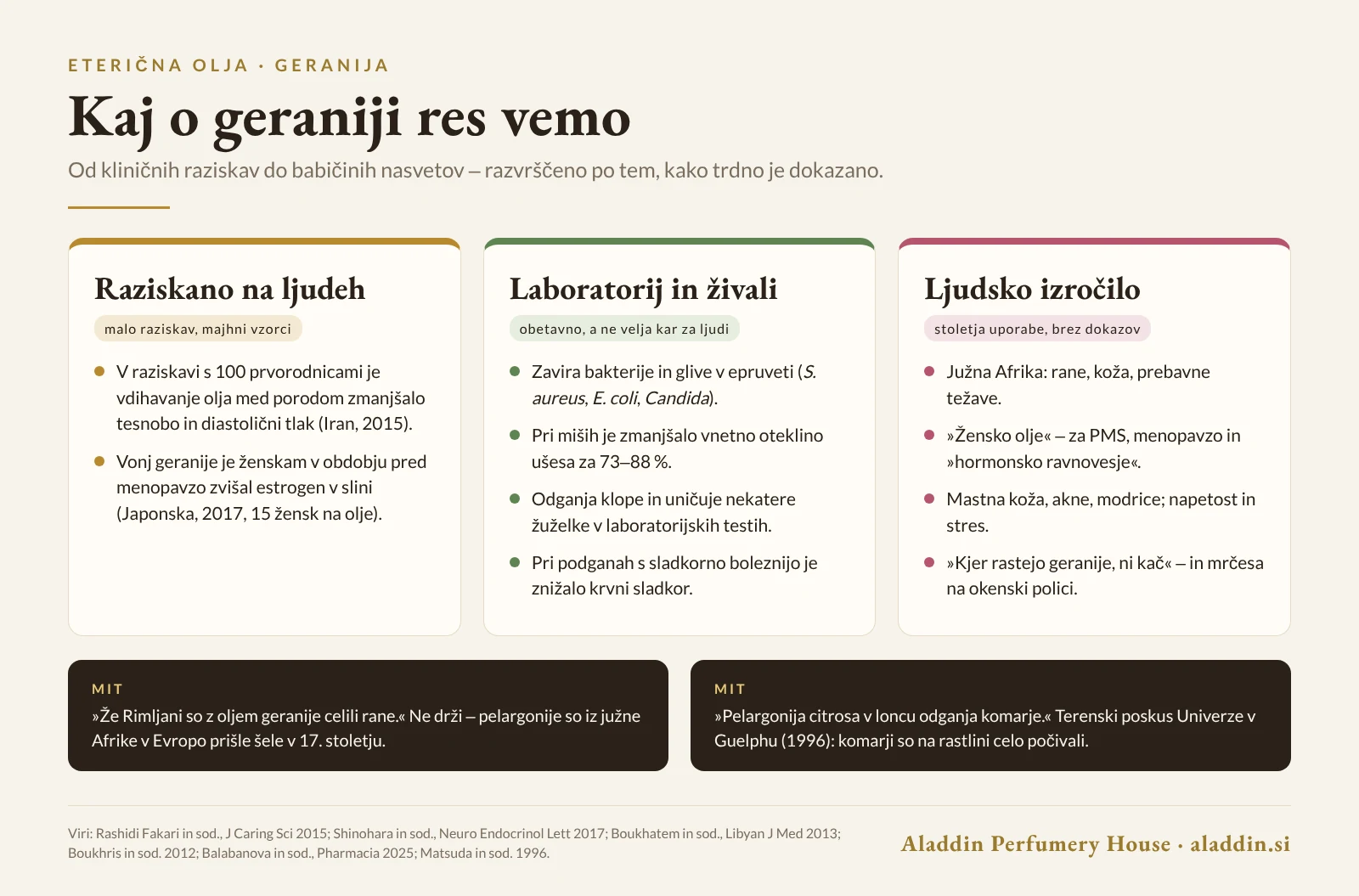
Many promises surround geranium, so we have sorted them by how well they are supported. One rule applies: what works in a test tube or in mice doesn’t necessarily work in people. Folk tradition is interesting as part of the plant’s story, not as instructions for treatment.
Studied in humans
- Anxiety during labour. In an Iranian clinical study (2015), 100 first-time mothers in the first stage of labour were randomly divided into two groups. Women who inhaled geranium scent had significantly lower anxiety levels and lower diastolic blood pressure afterwards than women in the control group.
- Oestrogen before menopause. A Japanese study (2017) tested ten essential oils on women approaching menopause. After inhaling geranium and rose scent, salivary oestrogen levels rose more than with the control scent. The study was small, with 15 women per oil.
Both studies are interesting but small. More and larger studies would be needed for firm conclusions.
In the laboratory and in animals
- Antibacterial and antifungal. In the laboratory geranium oil inhibits the growth of many bacteria, including Staphylococcus aureus and Escherichia coli, as well as the yeast Candida albicans.
- Anti-inflammatory. In mice, oil applied to the ear reduced inflammatory swelling by 73 to 88% (Algeria, 2013).
- Antioxidant. In laboratory tests the oil and extracts scavenge free radicals.
- Blood sugar. In diabetic rats the oil lowered blood sugar (Tunisia, 2012). Interesting, because rose geranium is also used for this in Tunisian folk medicine.
- Against insects and ticks. In laboratory tests the oil repelled more than 90% of ticks and was also effective against houseflies, mites and rice weevils.
Folk tradition and aromatherapy
This is the longest list. In southern Africa pelargoniums were used to heal wounds and for skin problems. In aromatherapy literature geranium is regarded as a “women’s oil”: it is recommended for premenstrual complaints, irregular periods and menopause, and for “hormonal balance”. It is credited with helping oily skin, acne, eczema and bruises, as well as stress, tension and nerve pain. In 2025 the Egyptian Drug Authority compiled these traditional uses in its monograph on rose geranium.
Old beliefs are even more colourful. “Where geraniums grow, there are no snakes,” says an English saying; scented pelargoniums on the windowsill were supposed to keep vermin away, and leaves rubbed on door handles were meant to protect the home. The Victorians made compresses against headaches with geranium vinegar.
Two myths you can safely forget
- “The Romans already healed wounds with geranium oil.” You’ll find this claim on many websites, but it isn’t true: pelargoniums are native to southern Africa and only reached Europe in the 17th century. The Romans may have known native cranesbills, but not geranium oil.
- “A potted citrosa pelargonium repels mosquitoes.” The cultivar ‘Citrosum’ is sold as a “mosquito plant”. A field trial by the University of Guelph in Canada (1996) showed that a pot next to people doesn’t reduce the number of bites – mosquitoes even rested on the plant. Only crushed leaves have some repellent effect, and even that is much weaker than real repellents.
How we use geranium at home
Our geranium oil is intended for scenting rooms. At home it creates a soft, floral atmosphere that isn’t heavy, so it suits the living room, bedroom and rooms where you receive guests. In blends it acts as a bridge: it gives citrus elegance and woody oils softness.
- Ultrasonic diffuser: 3–5 drops per 100 ml of water; for a 300–400 ml tank about 10–15 drops.
- Waterless nebuliser: pour the oil into the device’s bottle and screw it on.
- Scent stones, wooden beads or ceramics: 2–3 drops, repeat as needed.
Air the room occasionally during use. For the living room the Urban diffuseris a lovely choice, and for the bedroom the Himalayan salt night light. If you prefer a tealight aroma burner, try wax melts with geranium and anise.
Six geranium blends for the diffuser
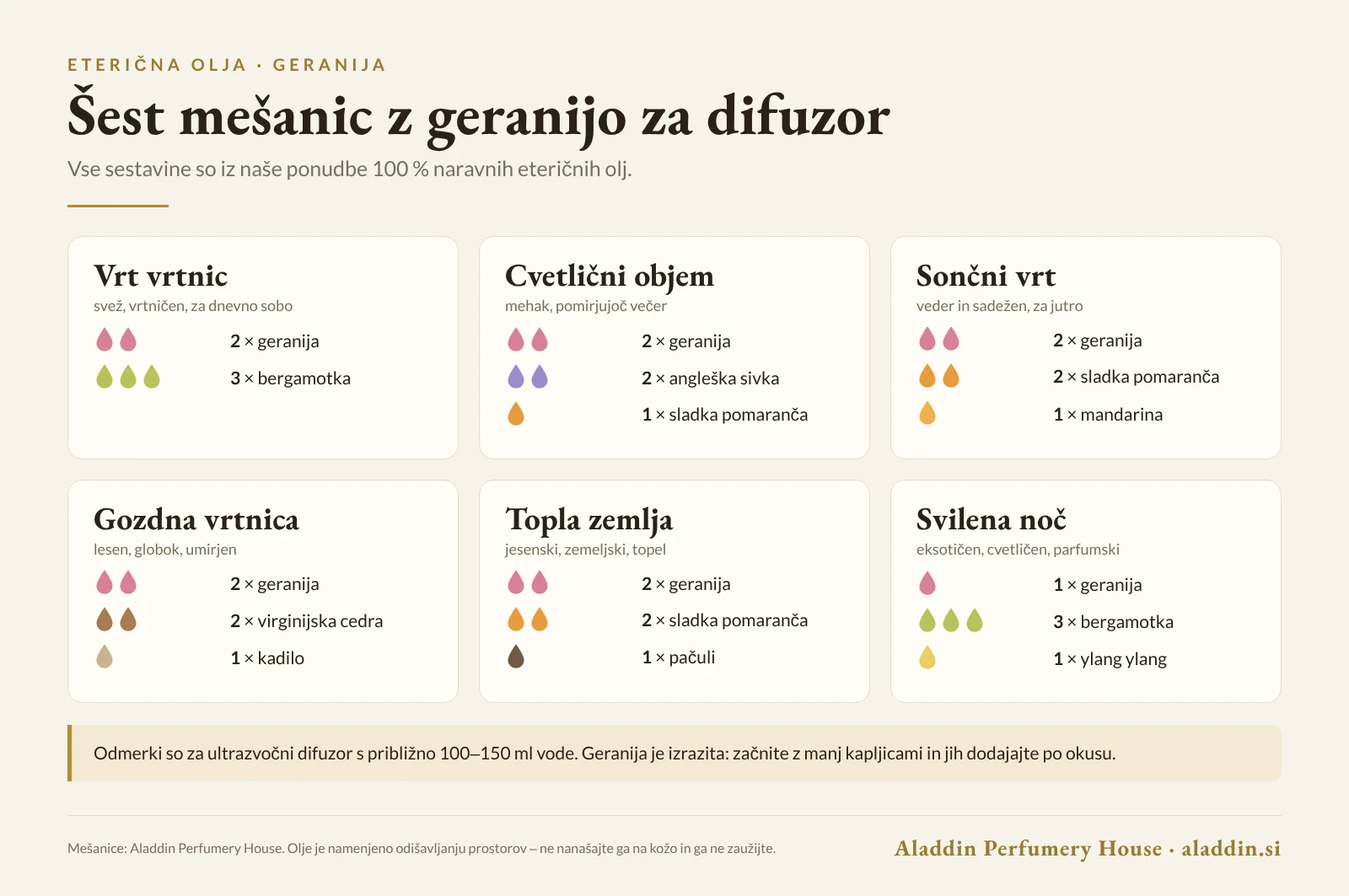
Geranium pairs beautifully with citrus and woody oils. The blends below are made exclusively from oils in our range, and the amounts are for an ultrasonic diffuser with about 100–150 ml of water.
| Blend | Ingredients (drops) | When |
|---|---|---|
| Rose Garden | 2 geranium + 3 bergamot | during the day and when you’re expecting guests |
| Floral Embrace | 2 geranium + 2 English lavender + 1 sweet orange | calm evenings |
| Sunny Garden | 2 geranium + 2 sweet orange + 1 mandarin | mornings and grey autumn days |
| Forest Rose | 2 geranium + 2 Virginia cedarwood + 1 frankincense | reading, meditation |
| Warm Earth | 2 geranium + 2 sweet orange + 1 patchouli | cold autumn and winter evenings |
| Silken Night | 1 geranium + 3 bergamot + 1 ylang ylang | a perfumed evening for two |
Tip: geranium is distinctive. If the scent is too strong for you, reduce the geranium to one drop and increase the proportion of citrus. You can also prepare a blend you like in advance in an empty bottle and simply measure it out in the evening.
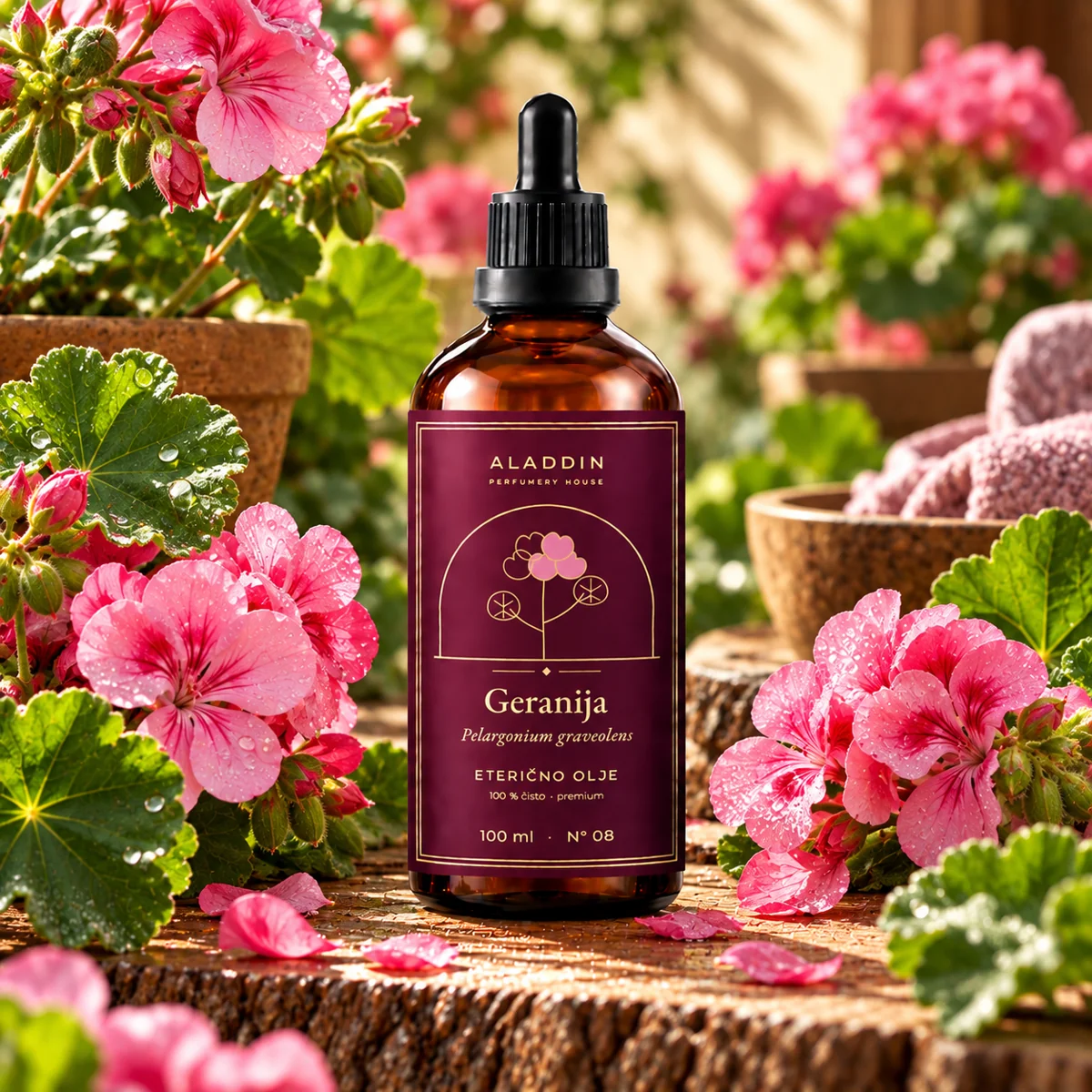 GeraniumThe rose heart of blendsView product
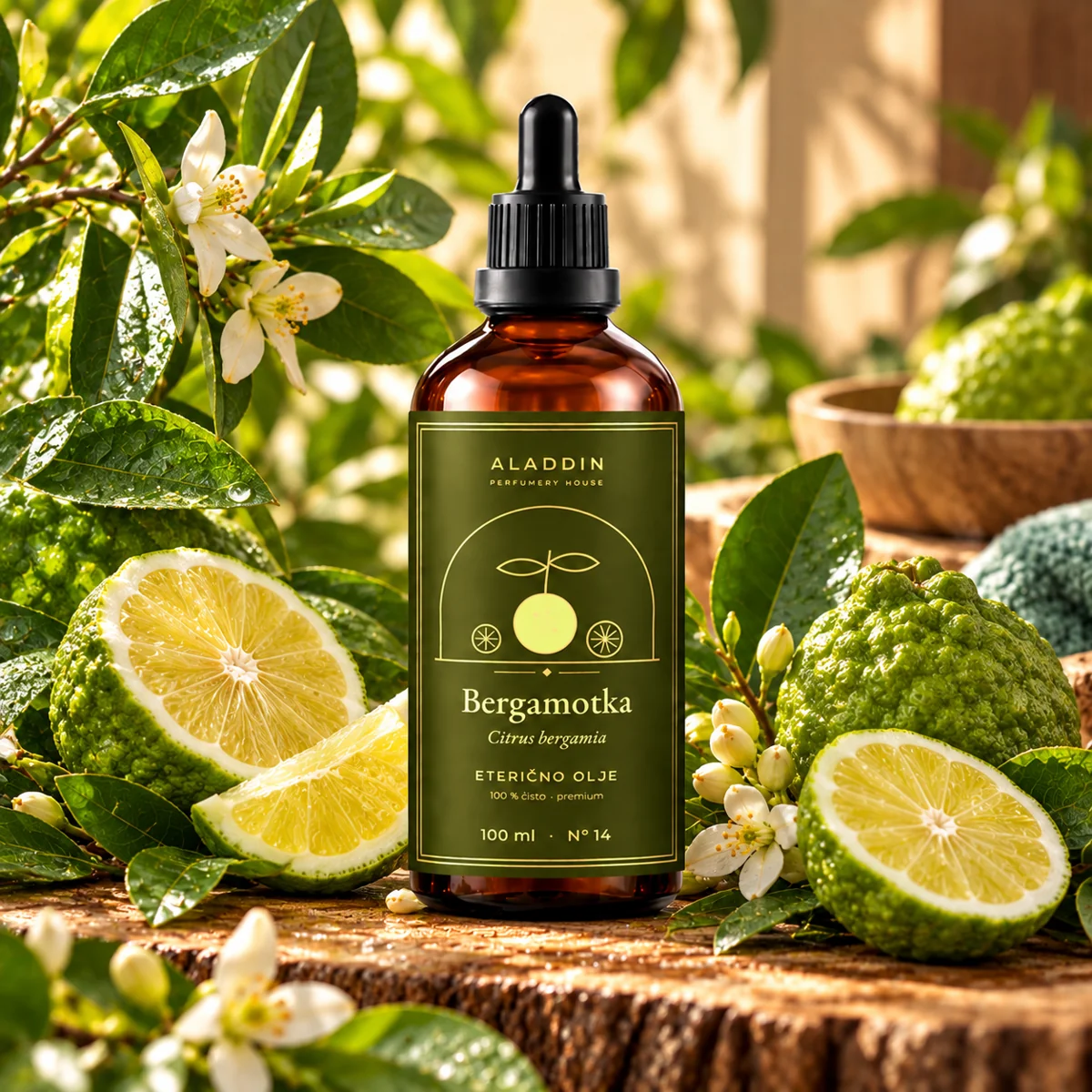 BergamotA fresh citrus partnerView product
 Virginia cedarwoodA woody, calm baseView product
Safe use – a few rules worth following
- Do not apply the oil to the skin and do not swallow it. Our oil is not a cosmetic product. Cosmetic products with geranium are specially formulated and safety-assessed, whereas pure essential oil is a concentrate.
- Pure oil irritates the skin, may cause an allergic skin reaction and serious eye damage. Wear gloves when decanting and dosing and protect your eyes. If oil gets into your eyes, rinse them carefully with water for several minutes and seek medical help.
- Pregnant and breastfeeding women and people with hormone-dependent conditions (such as endometriosis or certain types of cancer) should consult a doctor before use. Some components of geranium have a mild oestrogen-like effect.
- Do not use the diffuser in a room where a baby is sleeping.
- Pets: pelargoniums are toxic to dogs, cats and horses because of geraniol and linalool (American ASPCA). Signs include vomiting, loss of appetite, lethargy and skin inflammation. While the diffuser is running, the animal should always be able to go to a scent-free room. Cats are especially sensitive to essential oils.
- The oil is toxic to aquatic organisms, so don’t pour leftovers down the drain.
- Keep the bottle tightly closed, in a cool, dark place and out of the reach of children.
- Aromatherapy does not replace medical treatment. If you have health problems, consult a doctor.
A safety data sheet is available for every oil and we will email it to you on request. You can view the label with all warnings on the product page.
Frequently asked questions
Is geranium oil made from balcony pelargoniums?
No. It is obtained from the scented pelargonium Pelargonium graveolens and its hybrids, which have small flowers and strongly scented leaves. Balcony pelargoniums are grown for their flowers.
Why does geranium oil smell of roses?
Because it contains the same main fragrant alcohols as rose – citronellol and geraniol – plus rose oxides.
What does “Bourbon” geranium mean?
Oil from the island of Réunion, once called Île Bourbon, or from Madagascar. It is considered the most balanced and is the most expensive. Our oil is of the Egyptian type – greener and more aromatic.
Does geranium oil repel mosquitoes?
In the laboratory the oil works against some insects and ticks, but the potted plant doesn’t repel mosquitoes. To protect against bites, use registered repellents.
Can I use geranium oil on my skin?
Our oil is intended for scenting rooms and is not a cosmetic product, so don’t apply it to your skin. For skincare, choose a cosmetic product that is designed and safety-assessed for that purpose.
Is geranium oil safe for cats and dogs?
Pelargoniums are toxic to dogs and cats. Keep the bottle out of their reach and don’t use the diffuser in a room the animal can’t leave.
How many drops of geranium oil should I put in the diffuser?
For an ultrasonic diffuser, 3–5 drops per 100 ml of water. Start with less and increase the amount if needed.
A small leaf with a big story
History has constantly mistaken geranium for something else – balcony pelargoniums, true cranesbills and even rose. But that’s exactly its charm: in a single drop it combines the scent of rose, the freshness of a green leaf and three centuries of travels from southern Africa to Grasse and the Nile.
If you’d like to get to know it, start simply: put two drops of geranium and three drops of bergamotin your diffuser. You’ll find the whole range in the Natural essential oilscategory. We described how essential oils are made and how to recognise good quality in the article Essential oils: from plant to bottle, and oils for evening relaxation in the guide Which essential oil to use in the evening.
In the next part of the series we’ll introduce another oil from our range. If you have a question, write to us or give us a call – we’re happy to advise.
Sources
- Balabanova V. et al. (2025): Recent studies on Pelargonium graveolens L’Hér. – Pharmacia 72
- Rashidi Fakari F. et al. (2015): Geranium aroma and anxiety during labor – J Caring Sci 4(2)
- Shinohara K. et al. (2017): Essential oil exposure and salivary estrogen – Neuro Endocrinol Lett 37(8)
- Boukhatem M. N. et al. (2013): Rose geranium essential oil as anti-inflammatory – Libyan J Med 8
- Boukhris M. et al. (2012): Hypoglycemic effects of Pelargonium graveolens oil – Lipids Health Dis 11
- Egyptian Drug Authority (2025): Egyptian Herbal Monograph – Pelargonium graveolens
- Egyptian Journal of Horticulture (2013): Effect of drying geranium herb before distillation
- PROTA / Pl@ntUse: Pelargonium Rosat Group
- dsm-firmenich: Geranium Egypt – cultivation in Egypt
- Oxford Botanic Garden: Pelargonium
- DAAF La Réunion (2026): Filière plantes à parfum et médicinales
- ASPCA: Geranium – toxic and non-toxic plants
- Matsuda B. M. et al. (1996): Field evaluation of the citrosa plant as a mosquito repellent – J Am Mosq Control Assoc 12(1)


